
How to Choose Book Binding Tools: A Buying Guide for Beginners
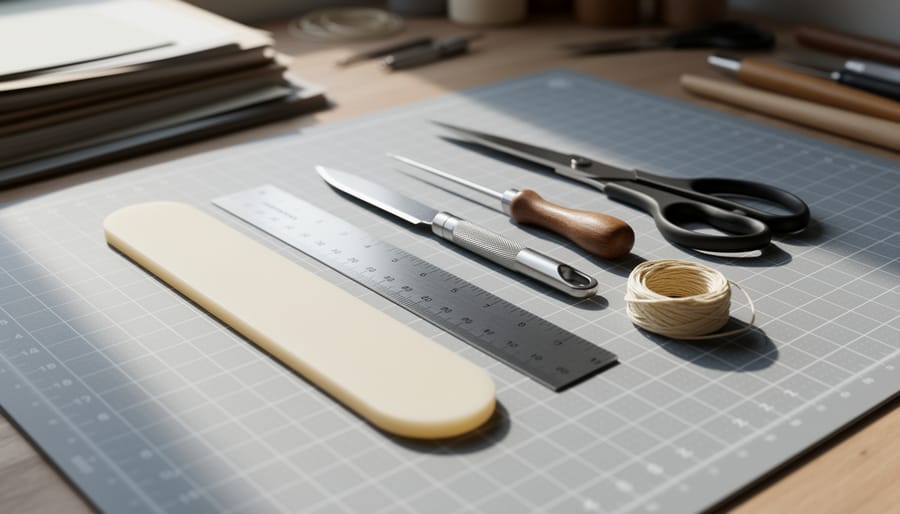
You can start bookbinding with a handful of inexpensive tools: a bone folder, a metal ruler, a sharp knife, scissors, a safe cutting surface, an awl, and…
You can start bookbinding with a handful of inexpensive tools: a bone folder, a metal ruler, a sharp knife, scissors, a safe cutting surface, an awl, and some waxed thread. That’s the whole list for your first few books, and it’s roughly what the University of Toronto’s bookbinding basics guide recommends. The Canadian Bookbinders and Book Artists Guild (CBBAG) builds its basic tool lending kit around the same core: a straightedge, square, slitting knife, dividers, scissors, and an awl.
In the interest of transparency, we earn a commission on some purchases made through links on this site. As an Amazon Associate I earn from qualifying purchases.
Why so short? Because most of the work in hand binding is folding, measuring, cutting, and piercing, and a few good basics handle all of it. A bone folder gives you crisp creases. A steel ruler keeps your cuts straight. An awl punches clean sewing holes so your thread has somewhere to go.
If you’d rather skip the sewing, thermal binding is the other route, and it’s a different kind of shopping entirely.
In this guide, we’ll walk through eight beginner-friendly picks, from the 2 Pcs Bone Folder Tool and the 6-Inch and 12-Inch Stainless Steel Metal Ruler to the 10PCS Waxed Thread 150D Multicolor Leather Sewing Thread and the Fellowes 5256801 Thermal Presentation Covers-3/4-Inch. We’ll also cover what to look for, the hand-versus-thermal choice, and the mistakes many of us make early on. Amazon.ca alone lists more than 1,000 results for bookmaking tools, so a short, honest list helps. Let’s build yours.
What Book Binding Tools Do You Actually Need to Start?
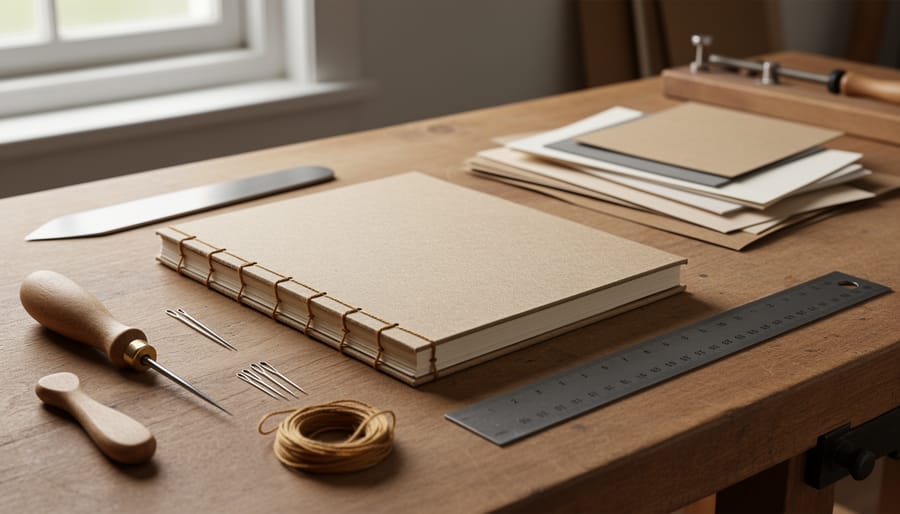
Starting book binding tools can feel like stepping into a workshop full of mysterious gadgets, but the real beginner list is short and friendly. The University of Toronto’s bookbinding basics guide keeps it simple: a folder, a metal ruler, a cutting mat or other safe cutting surface, a utility or X-Acto knife, and scissors.
Let’s translate those into plain language. A bone folder is a smooth, flat tool used to press and sharpen creases in paper, so your folds look crisp instead of fluffy. The guide notes that a Teflon folder works just as well, and even a popsicle stick can do the job while you’re getting started. A metal ruler gives you a straight edge you can safely run a knife along, since a plastic ruler can get nicked and wander. The cutting mat protects your table (and your blade), and the utility knife and scissors handle trimming paper and cover materials.
The Canadian Bookbinders and Book Artists Guild (CBBAG) Tool Lending Library offers a slightly different basic kit: a straightedge, a square, a slitting knife, dividers, scissors, and an awl. A square helps you keep corners at true right angles. Dividers are a compass-like tool for marking even measurements. An awl is a sharp, pointed tool that pokes sewing holes through paper, which is why it earns its place beside the thread.
If you’re not sure the craft is for you yet, borrowing is a lovely way to find out. A lending library like the one at CBBAG lets you try the tools before buying your own. Then you can build your kit one project at a time, keeping only what you reach for again and again.
Key Buying Factors: What to Weigh Before You Add to Cart
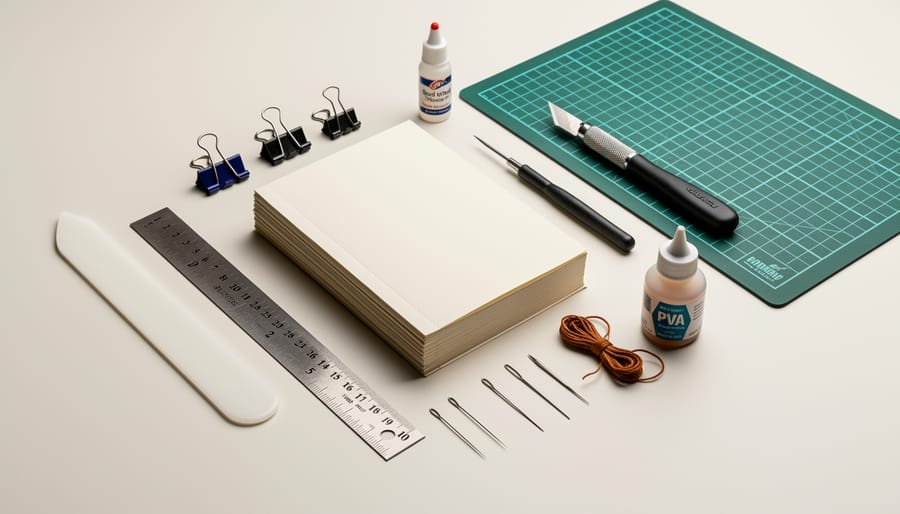
Before you add anything to your cart, it helps to run through a short list of questions. Most beginners overspend because they skip this step, not because they picked the wrong tool.
- Binding method: hand-sewn or stab-style books need folders, awls, thread and rulers, while thermal binding needs covers and a machine.
- Tool type: decide whether you need a folder, a cutting tool, a piercing tool or a measuring tool first.
- Kit contents: check which tools are in a set and whether you would actually use each one.
- Canadian availability: confirm the item ships to you and note any delivery thresholds.
- Shipping: weigh the cost of delivery against how much you are ordering.
- Rating and review volume: look at both the star score and how many people left it.
Your binding method comes first, because it decides almost everything else. A hand-sewn notebook asks for very different gear than a quick thermal-bound report, and mixing the two up is an easy mistake.
Material and feel matter more than you might expect. A folder or awl is something you hold for long stretches, so a comfortable grip makes the work more enjoyable.
On set size, the starter kits that experienced binders recommend are small. The University of Toronto’s bookbinding basics guide lists a folder (even a popsicle stick will do), a metal ruler, a safe cutting surface, a utility knife and scissors. The CBBAG Tool Lending Library’s basic kit adds a straightedge, square, slitting knife, dividers and an awl. If a set holds far more than that, ask whether you will use it all.
Canadian availability and shipping are worth a quick look too. Art Noise, for example, offers free shipping on orders over $89, so bundling a few tools into one order can make sense. Plan a modest budget, start with essentials, and add specialty items later.
Finally, treat ratings as a community signal. A high score from hundreds of reviewers tells you more than the same score from a handful.
Hand Binding vs. Thermal Binding: Types Compared
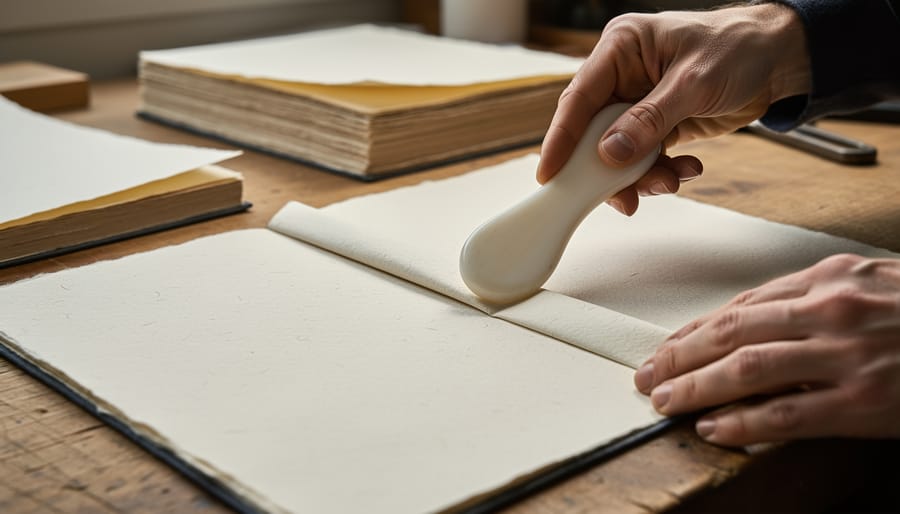
Two paths lead to a finished book, and the right one depends on what you’re making and how much time you want to spend. Hand binding means punching or piercing holes and sewing the pages together with thread. Thermal binding means sliding loose pages into a cover that has a heated adhesive strip inside, which a thermal binding machine then seals.
For hand-sewn and stab-style books (stab binding is the one where you pierce holes down the spine edge and stitch through the whole stack), the toolkit is the familiar one: a folder to crease pages, a metal ruler, an awl to pierce the holes, and waxed thread. For a thermal book, you need the presentation covers plus a thermal binding machine, which is a separate purchase.
| Binding method | Tools involved | Best for | Key consideration |
|---|---|---|---|
| Hand-sewn binding | Bone folder, metal ruler, awl, waxed thread | Hobby journal makers, card and paper crafters | Takes practice, but the finished book looks personal and handmade |
| Thermal binding | Thermal presentation covers and a thermal binding machine | Students, small-business presenters | Quick and tidy, but the look is more uniform and less crafted |
The learning curve is where the two really part ways. Hand binding rewards patience. Your first spine may wander a little, and that’s part of the fun. Thermal binding is nearly instant, so it suits a report due tomorrow or a portfolio you want to look polished without any sewing.
The look differs too. A hand-sewn book shows its stitches, which many journal makers love, while a thermally bound document has a clean, flat spine that reads as professional.
If you’re drawn to the craft itself, start with the hand tools. If you mostly need tidy, presentable documents, thermal covers are the simpler route. Plenty of readers end up trying both.
2 Pcs Bone Folder Tool: A Curved-and-Straight Pair for Crisp Creases

If you’re still sorting out what is book binding and where to start, this pair is an easy, friendly place to begin. The set pairs a curved bone folder with a straight one, and the two shapes each have their moments.
The straight edge is handy for scoring a clean line and pressing a long, crisp crease. The curved one suits burnishing, that smoothing step where you rub a fold or a glued surface flat so it sits neatly. Having both in hand means you don’t have to fight a single shape into jobs it wasn’t made for. Folding a booklet to saddle stitch? A steady stroke with the straight folder gives you that tidy spine fold.
The listing names handmade leather burnishing, bookbinding, cards and paper crafts, so it suits card makers, leather crafters and curious beginners alike. It holds a 4.3 out of 5 rating from 76 customer ratings, and it’s currently in stock. That’s a healthy community signal for a simple, useful pair.
6-Inch and 12-Inch Stainless Steel Metal Ruler for Straight, Safe Cuts

A metal ruler earns its place on your bench the moment a knife is involved. Run a blade along a plastic or wooden edge and it can nick the guide and wander off your line. Stainless steel stays put and keeps your cut straight, which matters when you’re trimming cover boards or paper for a book you care about. The University of Toronto’s bookbinding basics guide lists a metal ruler among its essentials, and for good reason.
This set pairs a 6-inch and a 12-inch ruler, and the two sizes suit different jobs. The shorter one is handy for measuring small signatures, marking sewing stations, and quick spine checks. The longer one gives you a steady edge for larger covers and wider sheets. The listing names a non-slip cork backing, which helps the ruler grip while you press down, though it’s still smart to cut on a protected surface and keep your fingers behind the blade.
Straight edges matter later, too. Clean, square cuts make everything fit better when you get to book glue binding, since tidy edges give you a neater finished spine.
Customers rate it 4.6 out of 5 from 311 customer ratings, and it’s currently listed as in stock.
10PCS Waxed Thread 150D Multicolor Leather Sewing Thread for Colourful Stitching

Waxed thread is ordinary thread coated in wax, and that thin coating does two helpful things for bookbinding. It lets the needle glide through paper and signatures more smoothly, and it keeps the strands from fraying or tangling while you work. If you’ve ever fought a knotted length of plain thread halfway through a stitch, you’ll appreciate the difference.
The 10PCS Waxed Thread 150D Multicolor Leather Sewing Thread is sold as a ten-piece assortment, listed for hand stitching leather, binding and bracelets. The listing gives the thread size only as 150D, so check the product page if you need more detail than that. The real fun here is the colour range. You can match a thread to your cover for a quiet, tidy look, or pick a contrasting shade so the stitching becomes part of the design. A bright spine stitch on a plain notebook is a lovely little detail.
It’s a friendly choice if you’d like to experiment with colour before settling on a favourite. Customers have given it 4.6 out of 5 from 99 customer ratings, and it’s currently in stock. Pair it with an awl for pre-punched holes and you’ve got a simple, cheerful starter setup for your first hand-sewn book.
Fellowes 5256801 Thermal Presentation Covers-3/4-Inch for Quick Finished Documents

Let’s be upfront: the Fellowes 5256801 Thermal Presentation Covers-3/4-Inch aren’t a hand-binding tool at all. They’re covers for thermal binding, a quick method where a heated machine glues your pages into a spine. If your heart is set on sewing signatures with thread and an awl, these aren’t the answer. If you need a tidy finished document without much fuss, they might be exactly right.
The listing describes them as black, with a 180-sheet capacity, which makes them a fit for thicker reports and portfolios. Students handing in a project, anyone assembling a presentation, and self-publishers who want a short printed proof to hold and mark up would all find a use for them. One thing to plan for: a thermal binding machine is a separate purchase, so these covers only work if you already have one or are ready to add it.
Shoppers have rated them 4.4 out of 5 from 84 customer ratings, a solid community signal, and they’re currently in stock. Think of them as the speedy cousin of the craft tools above. You trade some of the handmade charm for a clean, uniform look in minutes, and for plenty of everyday projects, that trade is a happy one.
3 Pcs Leather Awls: Pre-Punch Holes Before You Sew

An awl is a pointed little spike that pierces your sewing holes before the needle ever gets involved. In hand binding, you punch through the signatures (the folded bundles of pages) and the cover first, so the thread follows a clean, straight path instead of fighting the paper. It’s a small step that makes a big difference to how tidy your spine looks.
The 3 Pcs Leather Awls set comes with a wooden handle, which gives you something comfortable to grip while you press. Having three is handy because it lets you keep one for paper and another for thicker covers, or simply hand one to a friend at a craft night. The listing is in stock, and the set holds a 4.3 out of 5 rating from 56 customer ratings, a solid community signal for such a simple tool.
Pair it with a good crease first. If you’re still building your kit, a bone folder tool will sharpen your folds before you start piercing.
One gentle reminder: always pierce on a protected surface, like a cutting mat or a scrap board, so you don’t mark your table or slip into your hand.
Fiskars 157650-1001 Traditional Bone Folder, a Trusted Classic

If you want one dependable folder and no fuss, the Fiskars 157650-1001 Traditional Bone Folder, 6 Inch, is a name you’ll see again and again in craft circles. It’s a familiar, no-frills pick, and sometimes that’s exactly what a beginner needs.
A bone folder does the quiet, essential work of bookbinding. You run it along a fold to make the crease crisp and flat, press down glued surfaces, and smooth paper without scuffing it. The University of Toronto’s bookbinding basics guide lists a folder among its core tools, so having a good one is a smart first step.
What stands out here is the community signal. This folder carries a 4.6 out of 5 rating from 506 customer ratings, a large pool of feedback for a single craft tool. That many people weighing in tells you far more than a handful of glowing reviews would, and it suggests plenty of crafters have found it reliable.
It’s currently in stock, which is handy if you’re ready to start your first notebook this week. Choose it if you’d rather own one trusted tool than a whole set you’ll only half use. Pair it with a metal ruler and you’ve already got the heart of a starter kit.
Lineco Bone Folder for Paper, Leather, Origami and More

If you bind occasionally but fold paper all the time, the Lineco Bone Folder is a sensible single tool to own. The listing describes it as a white crafting tool and origami paper creaser that works for paper, leather, bookbinding, origami, cards and DIY projects, so it isn’t tied to one craft. The size is listed as 15 x 2 x 0.5cm, which is slim enough to slide along a fold without crowding your fingers.
That range is the real appeal. One afternoon you might be pressing the spine of a small hand-sewn notebook flat, and the next you could be sharpening the creases on a stack of handmade cards or an origami piece. A folder like this does the same quiet job each time: it presses a fold down cleanly so the edge looks crisp instead of fuzzy.
It also has the strongest community signal on our roster: 4.8 out of 5 from 140 customer ratings, the highest of the eight picks. That is a healthy pool of feedback, which makes it easier to trust than a tool with only a handful of reviews. It is currently listed as in stock.
For beginners who want one dependable, flexible folder rather than a whole set, this is a friendly place to start.
4 PCS Bone Folder & Creaser Tool: A Budget-Friendly Plastic Option to Try

If you’re still deciding which binding type suits you, this 4 PCS Bone Folder & Creaser Tool set is a low-pressure way to experiment. It’s a plastic set, so it won’t feel like traditional bone, but it gives you four tools to try rather than one. That variety lets you work out which shape feels right in your hand for creasing, scoring and burnishing, whether you’re making a handmade journal, a scrapbook page or a paper card.
The listing describes it as suited to bookbinding, scrapbooking, leather burnishing and paper crafts, so it covers a lot of beginner territory in one go. Think of it as a trial run: use it for a few projects, notice which pieces you keep reaching for, and then decide whether a single classic folder is worth adding later.
It’s rated 4.2 out of 5 from 28 customer ratings and is currently in stock. That’s a smaller review pool than some of the other picks here, so weigh it with a little extra care, and check whether the plastic feel works for how you like to fold. For a first toolkit, it’s a friendly place to start experimenting.
Which Pick Is Right for You? Recommendations by Project and Skill Level
Choosing gets easier once you decide what you want to make first. Start with the project, then pick the tool that fits it.
– A first hand-sewn notebook: Start with a folder, a ruler and an awl. The Lineco Bone Folder carries the strongest rating on the roster, while the 6-Inch and 12-Inch Stainless Steel Metal Ruler keeps cuts straight. Pair them with the 3 Pcs Leather Awls and the 10PCS Waxed Thread.
– Card and paper creasing: The 2 Pcs Bone Folder Tool gives you a curved and a straight shape, and the Fiskars Traditional Bone Folder is a dependable single option.
– Leather-style stitching: Go with the awls and the multicolour waxed thread.
– Quick thermal-bound documents: The Fellowes Thermal Presentation Covers suit this one. Remember that a thermal binding machine is a separate purchase.
Here is how all eight compare at a glance, using the ratings as listed:
| Product | Tool type | Best for | Customer rating |
|---|---|---|---|
| 2 Pcs Bone Folder Tool | Folder set | Creasing and scoring | 4.3 out of 5 (76 ratings) |
| 6-Inch and 12-Inch Metal Ruler | Ruler | Straight, safe cuts | 4.6 out of 5 (311 ratings) |
| 10PCS Waxed Thread 150D | Thread | Colourful stitching | 4.6 out of 5 (99 ratings) |
| Fellowes 5256801 Covers | Thermal covers | Quick finished documents | 4.4 out of 5 (84 ratings) |
| 3 Pcs Leather Awls | Awl set | Pre-punching sewing holes | 4.3 out of 5 (56 ratings) |
| Fiskars Traditional Bone Folder | Single folder | One dependable tool | 4.6 out of 5 (506 ratings) |
| Lineco Bone Folder | Single folder | Paper, leather, origami | 4.8 out of 5 (140 ratings) |
| 4 PCS Bone Folder & Creaser | Plastic folder set | Trying several shapes | 4.2 out of 5 (28 ratings) |
Still unsure? Begin with one folder and the ruler, then add pieces as your projects grow. What’s your own go-to tool? Share it with our community, because the best tips often come from fellow book lovers who have tried a few things themselves.
Common Mistakes to Avoid When Buying Book Binding Tools
Starting out is supposed to be fun, so let’s save you from the missteps that trip up a lot of beginners.
The biggest one is buying a huge kit before you’ve tried the craft. A basic set is genuinely small. The University of Toronto bookbinding guide lists a bone or Teflon folder (or even a popsicle stick), a metal ruler, a cutting mat or safe cutting surface, a utility or X-Acto knife, and scissors. That’s plenty for a first notebook.
Next, don’t skip the metal ruler and a safe cutting surface. A plastic ruler can get nicked by a blade, and cutting on a tabletop is rough on both the table and your fingers.
Another easy mix-up is confusing thermal binding covers with hand-binding supplies. Covers like the Fellowes set are meant for a thermal binding machine, which is a separate purchase, so they won’t help if you plan to sew signatures by hand.
Also check availability before you commit. Some Canadian shops set shipping thresholds, such as Art Noise’s free shipping on orders over $89, and a small order can end up costing more to ship than you expected.
Finally, don’t judge by star rating alone. A 4.8 from 140 ratings tells you something different than a 4.2 from 28, so glance at how many people have weighed in. None of this is about getting it perfect. Start small, stay curious, and enjoy the process.
Book Binding Tools FAQ
What tools do I need to start bookbinding?
The University of Toronto’s bookbinding basics guide lists a bone or Teflon folder, a metal ruler, a cutting mat or safe cutting surface, a utility or X-Acto knife, and scissors. Add an awl and some waxed thread if you plan to sew your pages.
Can I use a popsicle stick instead of a bone folder?
Yes, the same U of T guide mentions a popsicle stick as an option. A proper folder is nicer to hold and burnishes creases smoothly, but a stick will get you started.
Are thermal binding covers the same as hand binding?
No. Thermal covers are made for quick, tidy documents and need a separate thermal binding machine, while hand binding relies on folders, awls, thread and your own steady hands.
Where can I find book binding tools in Canada?
Amazon.ca shows more than 1,000 results for “bookmaking tools,” and specialty shops like Art Noise offer free shipping on orders over $89. If you’d like to try before you buy, the CBBAG Tool Lending Library offers a basic kit.
Whichever answer sounds most like your project, start small and let the craft tell you what to add next. Most beginners find that a few well-chosen basics go a long way, and you can always grow your toolkit as your books get more ambitious.
Here’s the good news: book binding tools really do start small. A bone folder for crisp creases, a metal ruler for straight cuts, an awl to pierce your sewing holes, and a spool of waxed thread will carry you through your first several books. Everything else, from thermal covers to specialty gear, can wait until a project genuinely asks for it.
That’s the beauty of this craft. You don’t need a fully stocked studio or a huge shopping cart to begin. You need a little patience, a safe surface to work on, and something you care about putting between two covers. If you’d like to try before you buy, a tool lending library is a lovely way to test the waters first.
So pick something that matters to you. Maybe it’s a well-loved story you’ve read a dozen times, a stack of recipes passed down through your family, or a blank journal that’s all your own. Fold the pages, punch your holes, stitch it together, and hold the result in your hands. There’s real joy in that.
When you’re ready for your next chapter, we’d love to keep you company. Explore more reading inspiration and self-publishing resources here on WikiLivres, and happy binding!
About Author
