What Is Book Binding (and Which Type Fits Your Public-Domain Project)?
Book binding is the method used to hold a book’s pages together and attach them to a cover, and the style you pick shapes how the finished book looks…
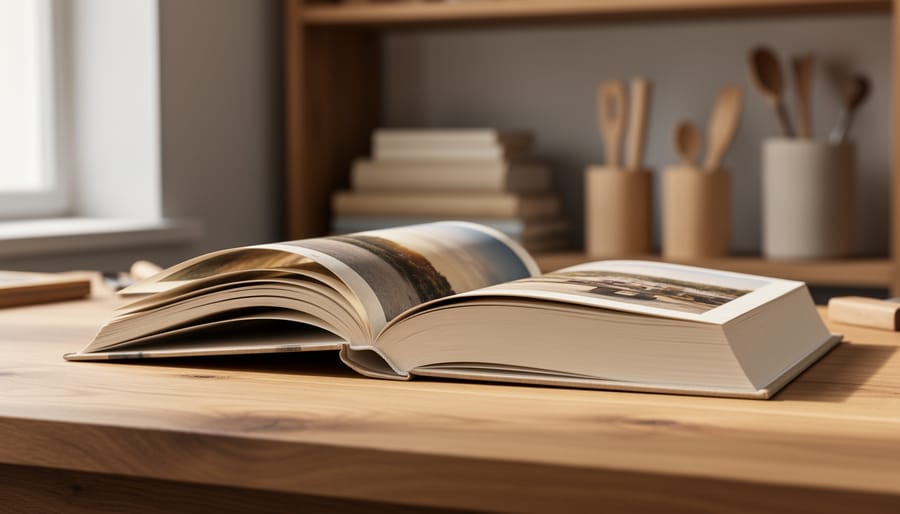
Book binding is the method used to hold a book’s pages together and attach them to a cover, and the style you pick shapes how the finished book looks, feels, and lasts. Perfect binding glues the pages at the spine, the way most paperback novels are made. Notch binding offers a similar look for traditional paperbacks and hardcovers. Otabind, also called layflat binding, keeps that polished perfect-bound feel but lets the book rest open on a table. Each one suits a different reader and a different purpose.
That last part matters most. The right choice depends on who the book is for and how it will be used, whether it’s a cookbook that needs to stay open on the counter or a novel meant to slip into a coat pocket.
Binding isn’t only a printer’s concern, either. Workshops on the history of the book still teach how bindings have changed and how to repair old ones, and plenty of readers in our community love a well-made spine as much as the story inside it. If you’re turning a public-domain favorite into a physical copy, you’re in good company.
Below, we break down the main binding styles in plain language, compare them side by side, and help you match one to your project.
What Book Binding Means in Plain Language
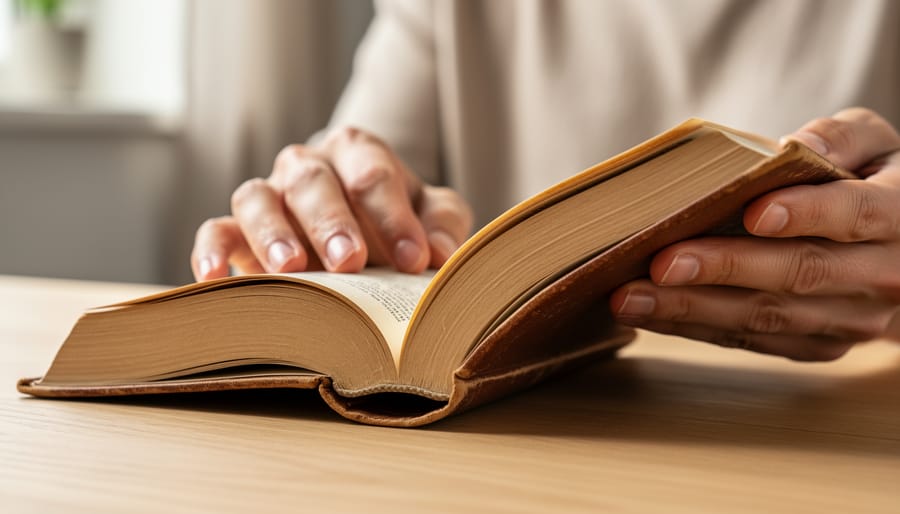
Think of book binding as the way a book holds itself together. It’s how loose pages get gathered, joined along one edge, and attached to a cover so you can open, read, and shelve them without a pile of paper sliding everywhere.
That sounds simple, but the choice shapes almost everything about the reading experience. Binding affects how comfortably a book opens, how well it survives being tossed in a bag or passed around a book club, and how much effort goes into making it. A cozy paperback and a sturdy keepsake edition can contain the exact same words and still feel completely different in your hands.
Here are a few terms you’ll see throughout this guide:
- Spine
- The edge where the pages are joined and the part you see when a book sits on a shelf.
- Signature
- A group of pages folded together, which are then gathered with others to build the book.
- Text block
- All the pages of a book bound together, before the cover goes on.
- Endpapers
- The sturdy sheets at the front and back that connect the text block to the cover.
- Bookboard and bookcloth
- The stiff board and fabric covering that give hardcover books their solid, lasting feel.
Books have been changing for a very long time. Edward’s look at how books have evolved over 4,000 years, with a special focus on the last 40, is a good reminder that the humble book has gone from scrolls to codices to the many bindings we have now, and it’s still evolving.
So which style is right? That depends on who the book is for and how it will be used. We’ll dig into the options next.
How a Book Comes Together: The Basic Binding Process
Why the Spine Method Changes Everything
The way a book is joined along its spine decides almost everything about how it behaves in your hands. A glued spine gives you that familiar paperback feel: slim, light, and affordable to make, but it can resist opening fully and may crack if you bend it hard. Sewn signatures, where folded groups of pages are stitched together, usually open more naturally and hold up through years of rereading, which is why they suit keepsake editions. Mechanical joins, like spiral coils or wire, let a book lie completely flat, ideal for workbooks and reading guides.
If you go the glue route, it’s worth choosing adhesives with care, since the bond is what keeps pages in place over time. Which join feels right? That depends on who will read the book and how they’ll use it.
The Main Types of Book Binding, Explained
Perfect Binding: The Familiar Paperback
Perfect binding is the style you probably know best, even if you’ve never called it by name. The pages are trimmed flat, glued along the spine edge, and wrapped in a soft cover that folds around the whole block. Pick up almost any paperback novel and you’re holding one.
Its appeal is simple. It looks clean and tidy, feels familiar in the hand, and suits a story you’ll read straight through. If you’re curious how that glued edge holds together, our guide to book glue binding walks through the adhesive side of things.
The trade-off is flexibility. Perfect-bound books don’t lie flat on their own, and a spine that gets bent back hard can crack over time. That makes them a lovely fit for reading, and a weaker one for heavy, open-on-the-table use.
Notch Binding and Otabind (Layflat) Options
Some books need to look like a classic paperback or hardcover but behave better on a table. That’s where notch binding and Otabind come in.
Notch-bound books have a glued spine, much like perfect binding, with small notches cut into the spine edge to give the adhesive extra grip. Both perfect-bound and notch-bound styles suit a traditional paperback or hardcover look, so you get that familiar, polished feel readers already trust.
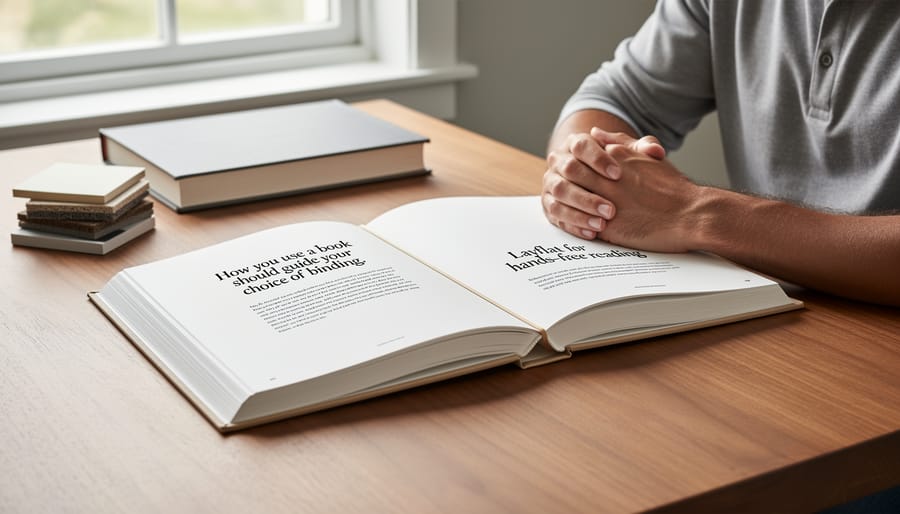
Otabind, also called layflat binding, takes it a step further. It keeps the look and feel of a perfect or notch-bound book but lets the pages lie flat when open. That makes it a smart pick for anything readers want to keep open on a table, like a cookbook, a study companion, or a reading-group guide, without wrestling the spine.
Have you ever propped a book open with a coffee mug? Layflat is for you.
Case Binding and Sewn Bindings: The Classic Hardcover Feel
When you want a book to feel like a keepsake, case binding is usually the answer. This is the classic hardcover: pages are sewn together in folded groups called signatures, then attached to a rigid cover made from bookboard wrapped in bookcloth or cover paper, with endpages tying it all together inside.
Sewing the signatures gives the spine real strength and flexibility, so the book opens comfortably and holds up to years of rereading. That durability is why this style suits classics and gift editions so well. A hardcover reprint of a public-domain favorite feels substantial in the hand and looks right on a shelf.
If you’re making something to pass down, this is a lovely place to start.
Saddle Stitch, Spiral, and Wire-O: Everyday Practical Choices
Staples through the fold are the simplest way to bind a slim book. A saddle stitch works well for short reading guides, anthologies of poems, or a community newsletter, and it can give you a professional booklet without much fuss. The catch is page count: once a book gets thick, the fold stops cooperating.
When you need a book to stay open on its own, look to spiral (coil) and Wire-O. Both let pages turn all the way around and lie completely flat, which is a gift for workbooks, journals, and study guides. Think of a cookbook propped beside the stove, or a reading-group packet covered in margin notes. They’re practical rather than precious, so match them to how the book will be used.
Traditional and Hand Bookbinding
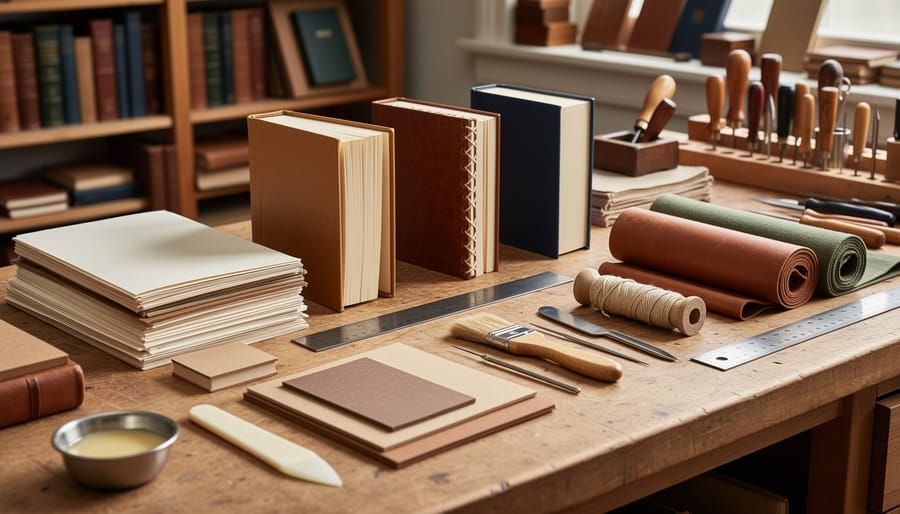
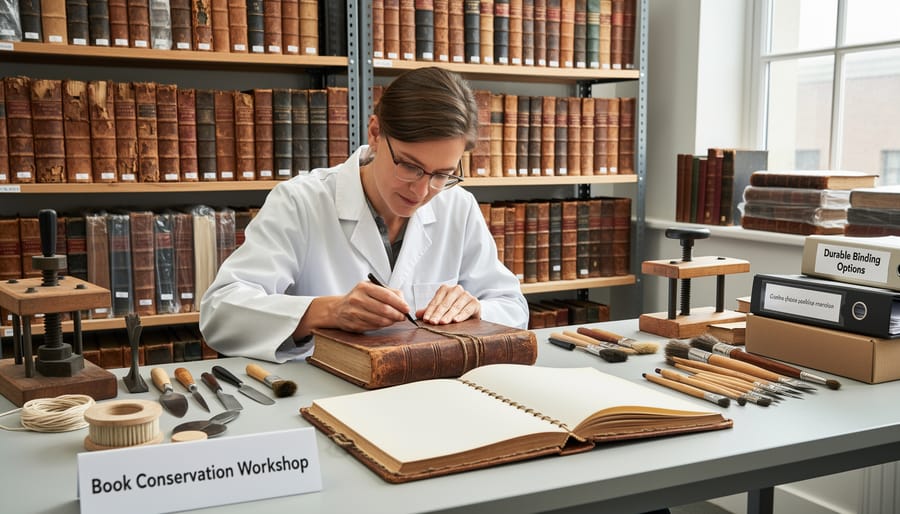
Before presses and glue machines, every book was bound by hand, and plenty of people still do it that way. Craft binding is a gentle, hands-on world, where a simple bone folder creases a signature just right. It also overlaps with conservation work, the careful repair of older volumes. Some workshops even teach the elements that make up a book and how to mend ancient ones.
Community groups, such as the CBBAG Ottawa Valley Chapter, supply non-stick tools, bookboard, bookcloth, cover paper, and endpages. Why not try a workshop, then share your handmade project with us?
Quick Comparison: Matching Binding Styles to Your Needs
Here’s a quick way to compare the main styles side by side. Think of it as a cheat sheet you can glance at before you commit to a format.
– Perfect binding: Clean, familiar paperback look. It’s comfortable for novels, though it doesn’t open flat and can strain with heavy handling. Best for classic-novel reprints.
– Notch binding and Otabind (layflat): Keeps the perfect-bound feel but opens flat on a table. Moderate durability. Best for books readers want to keep open while they work.
– Case binding with sewn signatures: A classic hardcover feel with strong durability. It opens well and lasts for years. Best for keepsake and gift editions.
– Saddle stitch: Slim and light, held by staples through the fold. Fine for short, everyday use. Best for booklets and zines.
– Spiral or Wire-O: Opens completely flat, with a practical, utilitarian look. Durable for repeated use. Best for workbooks, journals, and reading guides.
– Hand bookbinding: Handcrafted and personal, with durability that depends on the maker’s skill and materials. Best for one-of-a-kind or restored pieces.
A simple rule helps here: the style you choose depends on who the book is for and how it will be used. If readers will hold it for long stretches, think about comfort and durability first. If it needs to stay open on a desk or kitchen counter, lay-flat ability should lead your decision.
Choosing the Right Binding for a Public-Domain Book Project
Questions to Ask Before You Decide
Before you commit to a binding, run through these quick questions. They’re simple, but they save a lot of second-guessing later.
– How will people read it? Is it a cozy novel for the nightstand, or a cookbook or workbook that has to stay open on a table? If it needs to lie flat, think layflat, spiral, or wire-o.
– How long is it? Slim booklets suit staples through the fold, while longer page counts usually call for glued or sewn spines.
– How rough will the handling be? A book passed around a reading group or tossed in a bag needs sturdier construction than a keepsake on a shelf.
– What impression do you want to make? A gift edition of a classic often feels right with a hardcover, while a casual reprint can happily go paperback.
Remember, the style you pick depends on who the book is for and what it will be used for. Your answers to these questions point you toward the right fit.
Have you made one of these choices yourself? Tell the WikiLivres community what worked, and what you’d do differently next time. Your experience might be exactly what another creator needs to hear.
Personalized Picks: Which Binding Suits Which Reader or Creator
Not sure where to start? Here are a few pairings to point you in the right direction.
If you’re a cozy novel lover who reads in bed and on the commute, perfect binding is your friend. It’s the familiar paperback style, light in the hand and easy to tuck into a bag.
Gift-givers should look at case binding with sewn signatures. A hardcover has that keepsake weight, and it makes a classic feel special when someone unwraps it.
Book-club organizers often want something that survives passing around the table, so a sturdy hardcover or a notch-bound paperback holds up well. If your group annotates, think about layflat binding so the book stays open during discussion.
Hands-on crafters might enjoy traditional hand binding, then sourcing bookboard, bookcloth, and endpages for a one-of-a-kind edition.
None of these are rules, just starting points. What did you choose for your last project, and would you pick it again? Tell the WikiLivres community, because your experience might be exactly what another reader needs.
Where Binding Shows Up in Real Life: Uses and Applications
Once you start noticing binding, you’ll spot it everywhere. Here’s where each style tends to turn up:
- Perfect binding shows up in paperback novels, the everyday reads we stuff into tote bags.
- Perfect and notch-bound styles suit traditional paperback or hardcover books.
- Hardcover keepsakes and gift editions lean on case binding and sewn signatures for that lasting, shelf-worthy feel.
- Otabind or layflat binding works for books that need the look of a perfect-bound book but must lie flat on a table, like a recipe collection or reference guide.
- Workbooks and journals often use spiral or wire bindings so pages open completely flat.
- Booklets and zines are a natural home for saddle stitching, with staples right through the fold.
- Restored antiques rely on hand bookbinding and conservation techniques.
That last one is a living craft. A conservation workshop in Mar del Plata, for example, teaches attendees about the elements that make up a book through history, different types of binding, and techniques for repairing older volumes.
The point is simple: the style you choose depends on who you’re marketing it to and what it will be used for. If you’re bringing a public-domain classic back into the world, binding is only one piece of the puzzle. WikiLivres supports authors with editing and marketing services, so a thoughtfully chosen format can sit alongside a polished text and a plan for finding its readers.
Have you seen a binding in the wild that surprised you? Tell us about it.
Binding Questions Readers Often Ask
Readers send us a lot of binding questions, and a few come up again and again. Here are quick answers to the ones we hear most.
Which binding lies flat on a table?
Otabind, also called layflat binding, is the one to look for. It keeps the look and feel of a perfect or notch-bound book but opens flat, which is handy for anything you want to keep open while you read or work.
What is the most common binding for paperback novels?
Perfect binding is the style you’ll see most often on paperback novels. Perfect-bound and notch-bound styles both work well for traditional paperback or hardcover books.
Does my audience affect which binding I should choose?
Yes, and it’s one of the best guides you have. The style that suits you depends on who the book is for and what it will be used for, so picture your reader first and let that point you toward the binding.
Can older books be repaired?
They can. Conservation workshops teach the elements that make up a book, the different types of binding, and techniques for repairing older volumes. It’s a lovely skill to explore if you’ve got a well-loved antique on your shelf.
Have a binding question we haven’t covered? Share it with the WikiLivres community, because chances are another reader is wondering the same thing and someone has a handy answer.
So here’s the honest answer to “which binding is best?”: there isn’t one. A sewn hardcover is wonderful for a keepsake edition of a classic, but it might be overkill for a slim reading-group booklet. A spiral-bound workbook beats everything else when your hands are busy and the pages need to stay open. The right choice depends on who you’re making the book for and how it will be used, and now you’ve got the vocabulary to weigh those options with confidence.
If you’re feeling inspired, come browse the WikiLivres picks and see how different formats change the way a story feels in your hands. We’d love to hear from you, too. What’s your favorite book format? Do you have a binding story, maybe a beloved paperback that fell apart from rereading, or a handmade project you’re proud of? Share it with the community.
Public-domain classics are waiting for fresh eyes, and the way you present them can be as creative as the stories themselves. Happy reading, and happy binding!
About Author
