
Why Author Connections Matter More Than Ever (And How to Build Them)
Author connections are the professional and personal relationships writers build with other authors, and they matter because they directly influence your growth, visibility, and longevity in the publishing world. These relationships range from casual online interactions and writing group partnerships to mentorships and collaborative projects. Building them requires consistent engagement, genuine interest in others’ work, and strategic participation in literary communities both online and in person.
The reality is simple: writing is solitary, but a writing career isn’t. While the pandemic years taught us valuable lessons about isolation and reading they also revealed how much authors rely on each other for support, opportunities, and survival in an increasingly competitive industry. The writers who thrive aren’t necessarily the most talented. They’re the ones who show up, contribute to their communities, and cultivate relationships that extend beyond transactional networking.
Here’s what makes author connections particularly valuable in 2026: they open doors to beta readers who understand your genre, provide honest feedback that improves your craft, introduce you to agents and editors through warm referrals, and create collaboration opportunities you’d never find alone. When an established author shares your work with their audience or invites you to contribute to an anthology, that’s an author connection at work.
This isn’t about collecting contacts or gaming the system. It’s about finding your people. The writers who get your voice, celebrate your wins, commiserate over rejections, and push you to write better. Some connections happen organically through social media exchanges. Others require deliberate effort, attending conferences, joining critique groups, or reaching out to authors whose work resonates with you.
The good news? You don’t need to be extroverted or already successful to build meaningful author connections. You just need to start.
What Author Connections Really Mean in Today’s Literary World

Author connections aren’t about collecting business cards at conferences or accumulating followers on social media. They’re the relationships that sustain you through rejection letters, celebrate your small victories, and remind you why you started writing in the first place. In 2026’s literary landscape, these connections have evolved into something more nuanced and essential than traditional networking ever was.
At their core, author connections encompass every meaningful relationship you build around your writing life. They include the reader who emails you about how your book changed their perspective, the fellow author who answers your panicked text about a plot hole at midnight, the librarian who hand-sells your work to patrons, and the writing group that meets monthly to share drafts and encouragement. Each connection type serves a different purpose, yet together they create an ecosystem that supports your growth as a writer and a person.
- Reader Relationships
- Direct engagement with the people who read your work, from casual interactions on social platforms to deeper exchanges about themes and characters. These connections provide insight into how your stories resonate and often fuel your creative motivation.
- Peer Networks
- Relationships with fellow authors at various career stages who understand the unique challenges of the writing life. These connections offer practical advice, emotional support, and opportunities for collaboration that wouldn’t exist in isolation.
- Industry Partnerships
- Professional relationships with agents, editors, publishers, booksellers, and other literary professionals who help bring your work to readers. These connections blend business with mutual respect and shared goals.
- Community Bonds
- Connections to broader literary communities, whether local writing groups, online forums, genre-specific organizations, or regional book clubs. These networks provide a sense of belonging and collective identity beyond individual success.
What distinguishes genuine author connections from mere networking is reciprocity and authenticity. You’re not just building a contact list to leverage for book launches. You’re creating relationships where you give as much as you receive, where you celebrate others’ achievements without envy, and where vulnerability about struggles doesn’t feel risky. These connections become the invisible support system that catches you when your manuscript gets rejected for the fifteenth time and cheers when you finally break through.
The support extends far beyond book sales, though commercial benefits certainly exist. Author connections provide accountability when you’re struggling to finish a draft, introduce you to critique partners who elevate your craft, and create opportunities you never would have found alone. They remind you that writing, despite its solitary nature, doesn’t have to be a lonely profession. When you cultivate these relationships thoughtfully, they transform your entire experience as an author.
The Real Benefits of Building Author Connections
Creative and Professional Growth
When you connect with fellow authors, you gain more than friends, you gain creative catalysts. Other writers challenge your assumptions, introduce you to techniques you’ve never considered, and help you see your work through fresh eyes. A conversation about point-of-view shifts might solve a plot problem you’ve wrestled with for months. An offhand comment about pacing could unlock the revision strategy your manuscript desperately needs.
Constructive feedback from authors who understand the craft carries unique value. They recognize the difference between a draft exploring ideas and polished prose, and their insights hit differently than comments from well-meaning non-writers. Beta readers who write themselves can identify structural issues, point out when your dialogue rings false, or celebrate moments of genuine brilliance. This exchange sharpens your skills faster than working in isolation ever could.
Professional opportunities flow naturally from authentic author relationships. You might discover that collaborative writing inhibits isolation while opening unexpected doors. Perhaps a fellow author invites you to contribute to their anthology, or suggests co-writing a project that combines your complementary strengths. These collaborations expand your reach to new audiences and often lead to friendships that outlast any single project.
The creative energy that emerges when authors support each other’s growth creates a rising tide. When someone celebrates your breakthrough or commiserates over your rejection, they’re not just offering kindness, they’re validating the path you’ve chosen and reminding you why it matters.
Emotional Support and Motivation

Writing is a solitary pursuit that paradoxically demands a community to sustain it. When you’re alone with your manuscript at 2 AM, questioning whether anyone will ever read it, having fellow authors who’ve sat in that same chair makes all the difference. They don’t just understand the rejection emails that pile up or the months-long silences from agents, they’ve lived through them.
The psychological weight of writing extends beyond craft. Imposter syndrome hits hardest when you’re isolated, convincing you that everyone else belongs at the table except you. But when another author shares their own doubts, when they confess that their award-winning novel started as a mess they nearly abandoned, your internal critic loses some of its power. This validation doesn’t come from generic encouragement; it comes from people who know exactly how vulnerable you feel hitting “send” on a manuscript.
Author connections provide emotional scaffolding during the inevitable low points. A trusted writing friend can talk you off the ledge when a harsh review lands, or remind you why you started writing in the first place when the commercial pressures feel crushing. During periods of forced isolation, like the quarantine reflection many authors experienced, these connections became lifelines that prevented creative burnout.
Beyond crisis management, author communities celebrate the wins that non-writers can’t fully appreciate. They understand why selling your first foreign rights or finally nailing a difficult chapter deserves genuine excitement. This shared joy fuels motivation during the long stretches between milestones, reminding you that progress matters even when it’s invisible to the outside world.
Where to Find Your Author Community

Finding your author community doesn’t require attending exclusive literary conferences or having a published bestseller. The right spaces exist right now, waiting for you to join and contribute. The key is knowing where to look and what each community offers.
Online writing platforms provide accessible entry points for authors at any stage. Websites like Absolute Write, Scribophile, and Critique Circle host active forums where writers share craft advice, exchange manuscript feedback, and celebrate each other’s victories. These platforms work best when you approach them with genuine curiosity rather than a “what can I get” mindset. Reddit’s writing subreddits (r/writing, r/PubTips, r/selfpublish) offer daily discussions on everything from plot structure to marketing strategies, with veteran authors often dropping wisdom in the comments.
Social media communities deserve special attention because they’ve evolved beyond simple networking. Twitter (X) remains popular through writing hashtags like #WritingCommunity and #AmWriting, where authors share real-time struggles and wins. But don’t overlook platforms like Discord, which hosts invite-only servers organized by genre, writing stage, or specific interests. These smaller Discord communities often foster deeper relationships than broader social platforms because conversations happen in real-time and members develop inside jokes and shared references.
| Platform Type | Best For | What to Expect |
|---|---|---|
| Online Writing Forums | Craft improvement, manuscript feedback | Structured critique, slower-paced discussions, skill-focused |
| Local Writing Groups | Face-to-face accountability, regional networking | Regular meetups, mixed skill levels, lasting friendships |
| Genre-Specific Communities | Niche expertise, targeted support | Specialized knowledge, industry connections, sub-genre focus |
| Social Media Groups | Quick connections, broad reach | Fast-paced, varied quality, larger networks |
Don’t underestimate offline communities. Libraries, bookstores, and community centers host writing groups that meet monthly or weekly. These face-to-face gatherings create accountability that online spaces can’t always replicate. You show up, you write or discuss craft, and you build relationships with people who live in your area and might become your launch team when publication day arrives.
Genre-specific organizations offer targeted communities that understand your particular corner of the literary world. Romance Writers of America, Science Fiction and Fantasy Writers, Sisters in Crime, and dozens of others provide not just networking but education through workshops and conferences. Many offer local chapters where you can discover readers who love exactly what you write.
Consider communities that serve dual purposes. Book clubs focused on craft books or author development let you join learning communities while building connections. Co-working spaces for creatives bring together artists across disciplines, which can spark unexpected collaborations and fresh perspectives on your work.
Start with one or two communities rather than joining everything at once. Lurk for a week or two before diving in, observing the culture and expectations. Then introduce yourself authentically and contribute genuinely. Your author community is out there, having conversations you’d love to join.
How to Build Authentic Connections (Not Just Network)
Building genuine author connections starts with a mindset shift. Instead of approaching interactions with “What can I get from this person?”, ask yourself “How can I genuinely support this author’s work?” This small change transforms networking from a transactional chore into something that feels authentic and sustainable.
Start by showing up consistently in spaces where authors gather. Join a writing group, comment thoughtfully on author blogs, or participate in social media discussions about craft. Consistency matters more than grand gestures. When you regularly engage with someone’s work over time, they begin to recognize your name and remember your contributions to the conversation.
Make your first interactions about their work, not yours. Send a specific message about what resonated in their latest essay or novel. Point to a particular scene, character development choice, or metaphor that struck you. Generic praise like “loved your book” doesn’t create connection, but “the way you handled the protagonist’s grief in chapter seven made me rethink my own approach to writing loss” opens a door.
When you do share your own work, do it naturally within existing conversations. If someone asks what you’re working on or the discussion turns to a relevant topic, mention your project. Don’t force your writing into every interaction or immediately pivot conversations back to yourself.
Offer value before asking for anything. Share a relevant resource, introduce two authors whose work aligns, or amplify someone’s book launch on social media. These small acts of generosity build goodwill and demonstrate that you understand relationships require give and take.
Collaborate on low-stakes projects first. Guest post swaps, participating in anthology calls, or co-hosting a writing challenge create shared experiences without the pressure of major commitments. These collaborations also help when citing work together, such as understanding APA for co-authors in academic contexts.
Follow up after initial connections, but respect boundaries. Send a message a few weeks after your first conversation referencing something specific you discussed. If someone doesn’t respond, don’t take it personally or send follow-ups. Authors face overwhelming demands on their time.
Be vulnerable about your own struggles. When appropriate, share the challenges you face in your writing practice. This openness invites others to do the same and creates the foundation for deeper connection. The most meaningful author relationships often form around shared difficulties rather than shared successes.
Remember that building authentic connections takes time. You won’t become close friends with everyone you meet, and that’s fine. Focus on cultivating a few meaningful relationships rather than collecting hundreds of superficial contacts. The authors who genuinely support your work and whom you genuinely support in return will matter far more than a massive network of acquaintances who barely remember your name.
Supporting Fellow Authors: A Two-Way Street
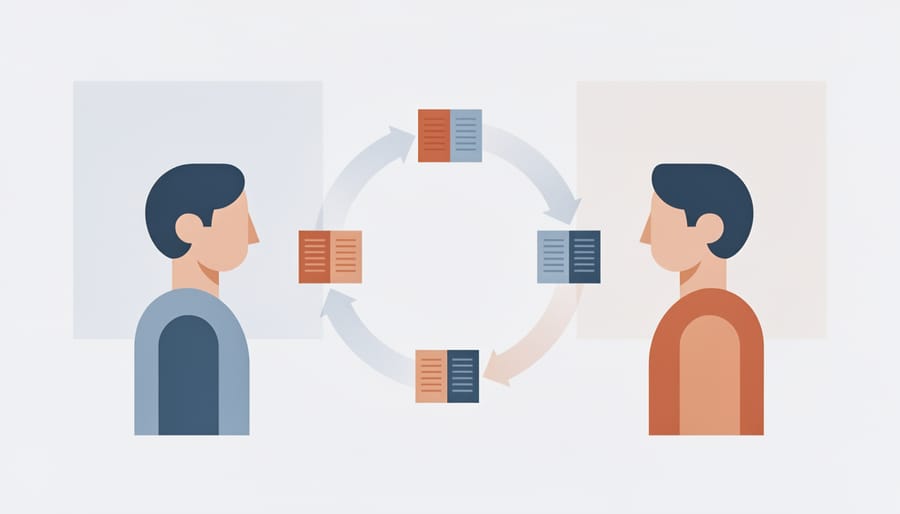
The most fulfilling author connections aren’t built on “what can you do for me?” They thrive on genuine reciprocity. When you celebrate another writer’s book launch, share their work with your readers, or offer feedback on their manuscript, you’re investing in the health of the entire literary community. And here’s what many authors discover: those acts of generosity come back to you in unexpected ways.
Supporting fellow authors takes many forms, and not all require significant time or resources. Leaving thoughtful reviews for books you’ve genuinely enjoyed, engaging authentically with other writers’ social media posts, or recommending their work to readers who might appreciate it costs nothing but attention. These small gestures accumulate into a culture of mutual support that benefits everyone, especially when you launch your next book and find that same generosity reflected back.
More substantial support might include blurbing each other’s books when it’s a genuine fit, co-hosting virtual events, or collaborating on promotional activities like newsletter swaps. The key is ensuring these partnerships make sense for both parties and their audiences. Forcing connections or supporting work you don’t actually believe in undermines trust and weakens your credibility.
Some authors hesitate to promote others, fearing they’ll lose readers to the competition. This scarcity mindset misunderstands how readers actually behave. Most voracious readers consume far more books than any single author could produce, and they value writers who introduce them to new voices. When you recommend another author’s work, you’re positioning yourself as a trusted curator, which strengthens your relationship with your audience.
The reciprocity doesn’t always come from the same person you helped. You might spend an hour critiquing a debut author’s opening chapters, and months later, a completely different writer offers to include your book in their newsletter. This diffuse reciprocity is how healthy communities function. The support circulates through the ecosystem rather than following rigid quid pro quo exchanges. Your contributions to the whole eventually benefit you, often when you least expect it but most need it.
Common Pitfalls to Avoid When Building Author Connections
Building genuine author connections requires awareness of what can undermine them. The most damaging mistake is approaching relationships purely as transactions. When you only message someone to promote your latest release or ask for a favor, people notice. This creates a pattern where every interaction feels like you’re taking rather than contributing, and connections quickly become superficial or fade entirely.
Another common pitfall is disappearing until you need something. You might engage actively in a writing group for weeks, then vanish for months only to resurface when you need beta readers or launch support. This inconsistency signals that the relationship matters only when it serves your immediate needs. Authentic connections require showing up regularly, even when you don’t need anything.
Comparison can poison potentially valuable connections. When you see another author’s success and immediately measure yourself against their achievement, resentment or discouragement creeps in. This might manifest as passive-aggressive comments, subtle competitiveness, or withdrawing from the relationship altogether. Remember that publishing timelines, sales figures, and opportunities vary wildly based on countless factors beyond talent or effort.
Some authors make the mistake of oversharing too quickly, dumping heavy personal struggles or detailed manuscript woes on new acquaintances. While vulnerability builds intimacy over time, overwhelming someone you barely know can create awkward distance rather than closeness. Build trust gradually.
Finally, avoid treating every interaction as a networking opportunity. If you’re constantly thinking about what someone can do for your career, you miss the chance to form real friendships. The writers who become your closest allies are often those you connected with as people first, authors second. Focus on shared interests, genuine curiosity about their work, and offering help without expecting immediate returns. The relationships that truly support your writing life develop naturally when you’re present, consistent, and authentically interested in others beyond what they can provide.
How WikiLivres Supports Author Connections
WikiLivres was built on the belief that great literature thrives in community, not isolation. The platform creates multiple touchpoints for authors and readers to connect in ways that feel organic rather than forced.
At its core, WikiLivres functions as a collaborative space where readers don’t just consume books, they engage with the stories and the people behind them. Authors can interact directly with their audience through book discussions, answering questions about their creative process or the themes woven into their work. These conversations often spark unexpected insights that enrich both the reading experience and the author’s understanding of how their work resonates.
Beyond the author-reader relationship, WikiLivres fosters connections among writers themselves. The platform’s community features allow authors to discover others working in similar genres or exploring complementary themes. This naturally leads to collaborative opportunities, from cross-promotion to co-authored projects or anthology contributions.
The recommendation system does more than suggest books to readers, it creates visibility bridges between authors who might never have found each other otherwise. When readers who love one author’s work discover another through thoughtful recommendations, both authors benefit from expanded audiences and potential collaboration partners.
WikiLivres also provides practical support services that reduce the isolation many authors feel. Whether you’re navigating the challenges of self-publishing or seeking feedback on a manuscript, the platform connects you with others who’ve walked similar paths. This isn’t networking for networking’s sake, it’s about building genuine relationships grounded in shared passion for storytelling.
The platform recognizes that every author needs both readers who champion their work and fellow writers who understand the journey. By facilitating both types of connections, WikiLivres creates an ecosystem where literary communities don’t just exist, they flourish.
The journey of a writer can feel solitary, but it doesn’t have to be. The truth is, no author succeeds in isolation. Behind every published book, every breakthrough moment, every sustained career stands a network of connections that provided encouragement, insight, and opportunity at crucial turning points.
Building these connections isn’t about collecting contacts or attending every event you can find. It’s about showing up authentically, offering value before asking for it, and recognizing that the writer sitting across from you, whether at a conference table or in a virtual chat, shares your struggles and dreams. They’ve faced the blank page, battled self-doubt, and celebrated small victories that only another author would truly understand.
The most powerful thing about author connections is their compounding nature. One conversation leads to an introduction, which leads to a critique partnership, which evolves into a friendship that sustains you through years of writing. That first connection you make today could be the person who champions your work, celebrates your successes, and reminds you why you started writing when the inevitable setbacks come.
You don’t need a massive network to thrive. You need genuine relationships with people who care about your growth as much as their own. Start small. Reach out to one author whose work you admire. Leave a thoughtful comment on someone’s blog post. Join one conversation in an online community. Every thriving author network began with someone taking that first, slightly uncomfortable step toward connection.
Your writing community is waiting. All you have to do is say hello.
About Author
