

12 Best Nonfiction Audiobooks to Dive Into Right Now, Curated
Both formats work beautifully for different situations.
The best nonfiction audiobooks transform your commute, workout, or evening wind-down into an opportunity for discovery, whether you’re drawn to sweeping histories, intimate memoirs, or practical frameworks for personal growth. This curated collection of 12 standout titles delivers proven quality across multiple genres, each selected for how well it works in audio format and validated by listener communities who’ve made them enduring favorites. You’ll find books that benefit from exceptional narration, stories that gain emotional power when spoken aloud, and ideas that sink in more naturally when you can absorb them at your own pace.
Great nonfiction audiobooks do more than simply read text to you. The right narrator brings personality to a memoir, clarity to complex research, or warmth to challenging subjects. Some books, like personal stories narrated by their own authors, create an intimacy impossible to replicate on the page. Others tackle dense material that becomes surprisingly accessible when a skilled voice guides you through.
This list spans human history and scientific breakthroughs, personal transformation and social justice, adventure writing and psychological insight. Each recommendation explains why the audio version stands out, helping you choose titles that match your interests and listening situation. Whether you’re new to audiobooks or building your next queue, these selections represent the format at its finest.
How We Curated This List
Choosing the right nonfiction audiobook can transform your commute, workout, or downtime into a meaningful learning experience. We built this list with care, drawing on multiple quality markers to ensure every title genuinely deserves your listening time. Rather than simply compiling popular picks, we focused on books that excel specifically in audio format, where narration elevates the story, complex ideas become accessible, and the listening experience adds something you wouldn’t get from the printed page alone.
Our selection process centered on five core criteria:
- Exceptional narration that brings the content to life and maintains engagement throughout
- Compelling storytelling that translates well to audio, even when covering complex subjects
- Diverse subject matter spanning history, memoir, science, psychology, and personal development
- Strong community recommendations from WikiLivres readers who’ve actually listened and valued these titles
- Lasting impact and relevance that extends beyond trending topics or momentary popularity
We also considered how well each book serves listeners with different interests and goals. Some titles here offer deep dives into scientific concepts, while others provide intimate personal narratives or sweeping historical accounts. This diversity ensures you’ll find something that resonates, whether you’re seeking practical wisdom, emotional insight, or intellectual challenge. The WikiLivres community values author connections and authentic voices, so we prioritized works where the subject matter and narrator work in harmony to create a truly memorable listening experience.
1. Sapiens: A Journey Through Human History

Yuval Noah Harari’s sweeping examination of human history has become a modern classic for good reason. This audiobook takes you from our species’ earliest days through the cognitive, agricultural, and scientific revolutions that shaped civilization as we know it. What makes the audio format particularly effective here is how it transforms dense historical and philosophical concepts into an engaging narrative journey you can follow during a commute or workout.
The narration brings clarity to Harari’s big-picture thinking about how Homo sapiens came to dominate the planet. You’ll encounter fascinating perspectives on everything from the role of shared myths in building societies to the unintended consequences of agricultural development. The audiobook’s pacing allows these provocative ideas to sink in naturally, giving you time to consider implications that might get lost in a quick visual scan.
This works especially well for listeners who enjoy intellectual challenges but prefer them delivered conversationally rather than academically. You don’t need a background in anthropology or history to follow along, the accessible storytelling makes complex evolutionary and sociological concepts feel immediate and relevant to understanding our present moment.
2. Born a Crime: Stories from a South African Childhood
Trevor Noah’s memoir stands as one of those rare audiobooks where the narrator’s voice transforms the entire experience. Growing up in apartheid and post-apartheid South Africa as the son of a Black mother and white father, a literal crime under the regime, Noah faced circumstances most listeners will never encounter. Yet his storytelling gift lies in finding universal truth within the specific, drawing connections between his childhood and broader questions about identity, belonging, and resilience.
The audio format delivers something the print version can’t: Noah’s own voice, complete with his gift for mimicry and his ability to shift between languages and accents. When he recreates conversations in Xhosa, Zulu, or Afrikaans before translating them, you’re not just reading dialogue, you’re hearing the cultural texture of his world. His comedic timing, honed through years of stand-up, keeps the pacing brisk even when addressing serious topics like poverty, domestic violence, and systemic oppression.
What makes this audiobook particularly compelling is how Noah balances humor with weight. He’ll have you laughing at his teenage schemes one moment, then quietly devastated by the realities of his mother’s courage the next. It’s memoir as master class in tone.
If you’re drawn to stories that examine how individuals navigate systems designed to limit them, themes that echo through discussions of policy and change in different contexts, you’ll find Born a Crime both entertaining and deeply thought-provoking.
3. The Power of Vulnerability: Essays on Connection and Courage
Brené Brown’s work on vulnerability has quietly reshaped how many people understand courage and connection, making this audiobook collection essential listening for anyone ready to examine their relationship with shame, belonging, and authentic living. The narration, delivered in Brown’s own conversational, research-grounded voice, transforms what could be dry social science into an intimate discussion that feels like you’re sitting across from a trusted friend who happens to have spent two decades studying human behavior.
What makes this collection particularly powerful in audio format is Brown’s ability to weave personal stories with research findings without the transitions feeling forced. She speaks with the same warmth and self-deprecating humor that made her TED talk resonate with millions, but here she has space to dig deeper into the discomfort of being seen, the mechanics of empathy, and why perfectionism actually blocks the connections we crave. The pacing gives you time to sit with challenging ideas, like the notion that vulnerability isn’t weakness but the birthplace of innovation and creativity, without rushing to the next point.
This audiobook rewards listeners who prefer their personal development grounded in data rather than platitudes, yet it never feels academic or distant.
4. Atomic Habits: Small Changes, Remarkable Results
James Clear’s practical framework for building better habits translates remarkably well to audio. The book breaks down the science of habit formation into clear, digestible principles, making tiny changes, stacking habits, designing your environment, that listeners can immediately apply to their own lives. Unlike dense academic works, this flows conversationally, with concrete examples that stick in your mind during a commute or workout.
The audio format actually enhances the experience for this type of content. You can absorb one concept during a morning walk, then test it throughout your day. The structure works perfectly for busy listeners who want actionable insights without needing to pause and take notes constantly. Clear’s accessible explanations mean you grasp the ideas on first listen, though many readers return to specific chapters when tackling particular habits.
This audiobook suits anyone looking to make genuine changes, whether you’re trying to exercise consistently, build a creative practice, or break counterproductive patterns. It’s especially valuable for listeners skeptical of self-help hype, since the approach focuses on systems and evidence rather than motivation alone. The practical tools work across different goals, making this a surprisingly versatile addition to your nonfiction rotation.
5. Educated: A Memoir of Transformation
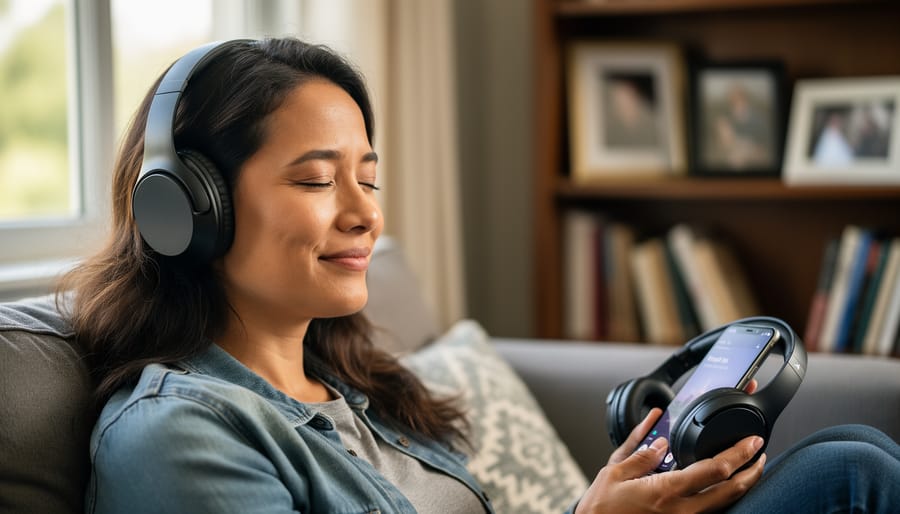
Tara Westover’s memoir stands as one of the most gripping personal narratives in recent nonfiction, and the audiobook brings her extraordinary journey to life with remarkable clarity. Growing up in rural Idaho without formal schooling, Westover’s path from complete isolation to earning a PhD from Cambridge unfolds through vivid, often harrowing episodes that the narrator renders with emotional precision.
The audiobook excels at conveying the internal struggle between loyalty to family and the pull of knowledge. As Westover grapples with her education, teaching herself enough to pass college entrance exams, then navigating university culture she’d never encountered, listeners feel the weight of each choice. The narrator captures both Westover’s determination and her vulnerability, making her transformation deeply human rather than simply inspirational.
What makes this memoir resonate beyond its specific circumstances is how it explores universal questions about identity, belonging, and what we owe to the people who shaped us. The themes connect to broader searches for meaning and understanding; if you’re drawn to learn philosophy Westover’s examination of how we construct our sense of self will fascinate you.
The pacing keeps listeners engaged through quieter moments of self-discovery and more dramatic confrontations alike. This isn’t about escaping a difficult childhood so much as building an entirely new framework for understanding the world, and yourself.
6. The Immortal Life of Henrietta Lacks
Rebecca Skloot’s exploration of Henrietta Lacks weaves medical history, bioethics, and family narrative into a single powerful story that resonates long after you finish listening. The audiobook format brings particular depth to this layered account of the woman whose cells, taken without consent in 1951, became one of medicine’s most important tools, contributing to breakthroughs from polio vaccines to cancer research while her family remained unaware and uncompensated for decades.
What makes this work exceptionally well in audio is how the narration carries you through multiple timelines and perspectives without losing emotional impact. You move between Lacks’s life in 1950s Baltimore, the scientific developments her cells enabled, and Skloot’s own journey to uncover the truth and connect with the Lacks family. The human element, Henrietta’s daughter Deborah’s search for understanding about the mother she barely knew, becomes visceral through voice in ways that pure text can’t quite capture.
The audiobook handles complex scientific concepts clearly while never sacrificing the story’s heart. You’ll grasp the significance of HeLa cells and informed consent debates, but you’ll remember Henrietta Lacks as a person, not a footnote in medical history. This combination of rigorous research and compassionate storytelling makes it essential listening for anyone interested in science, ethics, or the stories that shape modern medicine.
7. Thinking, Fast and Slow
Daniel Kahneman’s groundbreaking work explores how our minds operate through two distinct systems: the fast, intuitive mode that makes snap judgments, and the slow, deliberate thinking that requires effort and concentration. This dense exploration of cognitive biases, decision-making, and behavioral economics could easily overwhelm listeners, but the audiobook succeeds by making complex psychological concepts surprisingly accessible.
The narrator’s measured pace gives you time to absorb each idea before moving to the next, which proves essential when Kahneman introduces concepts like anchoring bias, availability heuristic, and prospect theory. You’ll find yourself pausing to reflect on how these patterns show up in your own daily decisions, from evaluating risks to making purchases to forming opinions about other people.
What makes this particularly valuable in audio format is how the examples and thought experiments come alive when spoken aloud. You can participate in the mental exercises Kahneman presents, testing your own cognitive shortcuts in real time. The conversational tone helps translate academic research into insights you can immediately recognize in your work, relationships, and habits.
This isn’t light listening you’ll breeze through during your commute. It demands attention and rewards careful engagement, making it ideal for listeners who want to genuinely understand human behavior rather than just collect productivity tips.
8. The Wright Brothers: Innovation and Determination

David McCullough’s biography transforms the Wright brothers’ story from a footnote in engineering textbooks into a gripping narrative of determination, ingenuity, and sibling collaboration. The audiobook shines because it treats the technical details, wind resistance, propeller design, engine weight ratios, not as dry specifications but as thrilling puzzles two bicycle mechanics solved through persistence and observation.
What makes this audiobook accessible to listeners beyond aviation history buffs is McCullough’s focus on character. You’ll hear about Wilbur and Orville’s methodical approach to problem-solving, their quiet confidence in the face of skepticism, and the family dynamics that shaped their work. The narrative doesn’t assume technical knowledge, yet it doesn’t oversimplify the achievement either. It’s the same storytelling clarity that makes resources like GRE prep books effective: breaking down complex material into understandable steps without losing substance.
The narrator captures McCullough’s measured, authoritative tone while keeping the pacing lively through the brothers’ experiments, setbacks, and eventual triumph. Whether you’re fascinated by early flight or simply drawn to stories of people who refused to accept conventional wisdom, this audiobook delivers both information and inspiration in equal measure.
9. Becoming: A Journey of Voice and Purpose
Michelle Obama’s Becoming holds a special place in the nonfiction audiobook landscape, and for a compelling reason: the author narrates her own story. There’s an authenticity in hearing someone recount their life journey in their own voice that no professional narrator can fully replicate. The warmth, humor, and occasional vulnerability in Obama’s delivery transform what could have been a standard political memoir into an intimate conversation.
The memoir traces her path from Chicago’s South Side through Princeton and Harvard Law, her years balancing career and family, and eventually her time as First Lady. What makes the audiobook particularly effective is how Obama’s vocal inflections highlight moments of doubt, determination, and joy that might read differently on the page. When she describes the pressure of representing millions while raising two daughters under intense scrutiny, you hear the weight of those experiences firsthand.
This audiobook resonates across remarkably diverse audiences, from young professionals navigating career choices to parents balancing ambition with family life. Students who might cite her insights using APA formatting in their research papers often find the audio version brings her perspective to life in ways the text alone doesn’t capture. The memoir’s appeal extends beyond politics or biography; it’s fundamentally about finding your voice and purpose amid external expectations, a theme that transcends any single background or experience.
10. The Body Keeps the Score: Mind, Trauma, and Healing
This groundbreaking exploration of trauma’s effects on both mind and body tackles some of psychology’s most challenging concepts, yet the audio format makes this dense material surprisingly accessible. The narrator’s measured pacing gives listeners time to absorb complex ideas about how traumatic experiences reshape our nervous systems, memories, and relationships. Rather than overwhelming you with medical jargon, the presentation builds understanding gradually through real patient stories that illustrate each concept.
What makes this audiobook particularly valuable is how it balances scientific rigor with human compassion. You’ll hear about cutting-edge research on PTSD, attachment, and recovery while following individual journeys that make the science feel immediate and relevant. The audio delivery helps clarify connections between childhood experiences and adult patterns, explaining why traditional talk therapy sometimes falls short and what alternative approaches show promise.
For readers interested in understanding trauma’s broader impact beyond individual psychology, you might explore bone folder tips that connect to how we physically engage with texts and learning materials. This audiobook works especially well for healthcare professionals, trauma survivors seeking understanding, or anyone wanting to grasp why people respond to stress and adversity in such varied ways. The narrator’s steady, empathetic tone creates space for reflection without dramatizing deeply personal material.
11. A Walk in the Woods: Adventure and Humor on the Trail
Bill Bryson’s classic trek along the Appalachian Trail offers exactly what listeners need when they want nonfiction that entertains as much as it informs. This travel memoir balances genuine outdoor adventure with Bryson’s signature dry wit, making it an ideal choice for your next long drive or weekend listening session.
The audio format amplifies Bryson’s comedic timing in ways the printed page can’t quite match. His observations about ill-prepared hikers, trail town characters, and his own misadventures with hiking partner Stephen Katz land with perfect delivery, turning what could be a straightforward hiking narrative into something genuinely funny. The narrator’s pacing lets the humor breathe without overselling the jokes.
You’ll appreciate this audiobook if you enjoy travel writing with personality, light nonfiction that doesn’t demand intense concentration, or simply need something that makes commutes more enjoyable. It’s also a solid pick for anyone curious about the Appalachian Trail without committing to actually hiking it, Bryson handles the blisters and bear scares for you.
The memoir works equally well whether you’re an outdoors enthusiast or someone who prefers reading about nature from the comfort of home. Bryson’s accessible storytelling and self-deprecating humor create an experience that feels like listening to a witty friend recount their adventure over coffee.
12. The Warmth of Other Suns: The Great Migration Story
Isabel Wilkerson’s sweeping chronicle of the Great Migration stands as one of the most ambitious and necessary works of American history you can experience in audio. Between 1915 and 1970, six million Black Americans fled the South for cities in the North and West, reshaping the nation’s social, political, and cultural landscape. This audiobook transforms what could have been a dense historical survey into an intimate, multi-generational story that follows three individuals who made that journey.
The audio format particularly shines here because Wilkerson structures the narrative around personal testimonies and lived experiences rather than abstract demographic data. You’ll hear about Ida Mae Brandon Gladney leaving Mississippi for Chicago, George Swanson Starling fleeing Florida for Harlem, and Robert Joseph Pershing Foster driving from Louisiana to California. Their individual stories illuminate larger truths about courage, resilience, and the American promise.
What sets this audiobook apart is how the narrator brings emotional weight to both the personal accounts and the historical context that frames them. The pacing allows complex themes, economics, racism, family bonds, hope, to develop naturally rather than overwhelming listeners with information. You’ll finish understanding not just what happened during the Great Migration, but why it matters today. This remains essential listening for anyone seeking to understand the forces that shaped modern America.
What Makes a Nonfiction Audiobook Truly Worth Your Time
Not every nonfiction audiobook deserves your time, even if the book itself is excellent. The difference between a forgettable listen and one that sticks with you often comes down to a few critical factors you can assess before you commit.
Start with narrator compatibility. The best narrators don’t just read words, they understand the content’s rhythm and emotional weight. A memoir needs warmth and authenticity, while a science or psychology title benefits from clarity and measured pacing that gives you time to absorb complex ideas. Listen to the sample before you buy. Does the narrator’s voice match the material’s tone? Can you imagine spending hours with this person guiding you through the content?
Consider whether the content itself suits audio format. Books with strong storytelling, memoirs, narrative histories, investigative journalism, tend to shine as audiobooks. Dense, heavily referenced works or those requiring frequent backtracking can frustrate listeners. Look for titles that move forward with clear structure rather than jumping between complex charts or footnotes you can’t easily reference.
Finally, check author authority and community validation. Has this book earned recognition from readers beyond marketing hype? Do multiple trusted sources recommend it? The titles on this list meet these standards, but you can apply the same lens to any nonfiction audiobook you’re considering. Quality narration paired with substantive content from a credible author creates the listening experience worth your investment.
What to Watch For
Beyond the basics of choosing well-reviewed titles, pay attention to production quality markers that separate great nonfiction audiobooks from merely good ones. Abridged versions cut content to save time, but they often lose the nuance and supporting examples that make nonfiction compelling, always opt for unabridged when available. Check the runtime against your typical listening habits: a 20-hour deep dive like Sapiens rewards commuters and long-distance travelers, while a tighter 6-hour listen like Born a Crime suits weekend listeners or those new to audiobooks.
The narrator’s relationship to the material creates massive impact in nonfiction. Memoirs read by their authors carry authenticity and emotional weight that professional narrators can’t replicate, even if the author’s delivery isn’t technically polished. For complex subjects, psychology, science, history, look for narrators who handle technical terms confidently and vary their pacing to match the content’s density. A skilled narrator will slow slightly for crucial concepts without making the whole book drag.
Finally, consider your listening context. Narrative-driven titles like Educated or The Warmth of Other Suns work beautifully for focused listening sessions, while more modular books about habits or decision-making let you pause and reflect between chapters without losing the thread.
Your Questions About Nonfiction Audiobooks, Answered
Should I read or listen to nonfiction books?
Both formats work beautifully for different situations. Audiobooks excel during commutes, workouts, or household tasks, letting you absorb knowledge while staying productive. Print or ebooks shine when you want to take notes, flip back to reread complex passages, or study diagrams. Many readers enjoy switching between formats for the same book, matching the medium to the moment.
Can I actually retain complex nonfiction in audio format?
Absolutely. Research shows comprehension rates are comparable between reading and listening when you’re fully engaged. For dense material like psychology or history, try adjusting playback speed to match your processing pace, listening in focused blocks rather than distractedly, and pausing to reflect on key points. Taking brief voice notes or mental snapshots of important concepts helps cement understanding.
Where can I find quality nonfiction audiobooks?
Major platforms like Audible, and your local library’s digital collection through apps like Libby or OverDrive offer extensive nonfiction catalogs. Library borrowing costs nothing and lets you explore widely without commitment. Subscription services work well if you listen consistently, while purchasing individual titles makes sense for books you’ll revisit or want to own permanently.
How do I choose the right narrator for nonfiction?
Sample the audio before committing. Listen for clarity, pacing that matches the material’s complexity, and a voice you won’t tire of over eight or twelve hours. Author-narrated titles like memoirs often carry extra authenticity and emotion, though professional narrators typically bring superior technical skill for longer works.
These questions come up frequently in our WikiLivres community discussions about nonfiction listening. The format continues to evolve, and what works brilliantly for one reader might not suit another. Your listening habits, daily routine, and subject preferences all shape which audiobooks will become favorites. Start with one title from our curated list that genuinely interests you, give it a few chapters to settle into the narrator’s rhythm, and you’ll quickly discover whether that particular book works better in your ears or in your hands.
Nonfiction audiobooks offer something special: they let you absorb powerful ideas, real stories, and new perspectives while you’re commuting, exercising, or winding down at the end of the day. The 12 titles we’ve explored here represent some of the most engaging, transformative listens available in 2026, each chosen for exceptional narration, compelling content, and the kind of lasting impact that stays with you long after the final chapter.
The beauty of this format is that there’s no single right place to start. Whether you’re drawn to the sweeping historical scope of Sapiens, the intimate memoir storytelling of Born a Crime, or the practical wisdom of Atomic Habits, trust your curiosity. Pick the one that speaks to your current interests or challenges, and give yourself permission to simply listen.
We’d love to hear what resonates with you. Have you discovered a nonfiction audiobook that changed how you see the world? Share your favorites with the WikiLivres community. Your recommendations help fellow readers find their next great listen, and together we create a richer, more diverse reading experience for everyone. Happy listening, and here’s to the knowledge, stories, and insights waiting in your next audiobook.
About Author
