

From High Stakes to High Literature: How Gambling Shaped Classic and Modern Fiction
From Dostoevsky’s “The Gambler” to modern tales of high-stakes poker, gambling has served as a powerful lens through which literature explores human nature’s most compelling contradictions. The allure of chance and fortune that drives those who play with trx today mirrors the same fundamental human desires that have captivated readers through centuries of literature review games and storytelling. In masterworks across cultures and eras, gambling emerges not merely as a plot device, but as a profound metaphor for life’s uncertainties, human ambition, and our eternal struggle between reason and impulse.
Whether examining the psychological depth of a compulsive gambler in “Casino Royale” or the social commentary embedded in poker scenes of the American West, gambling themes reveal universal truths about risk, redemption, and the human condition. These literary explorations resonate particularly strongly today, as digital platforms transform gambling from a physical act into an immersive virtual experience, while preserving the timeless emotional dynamics that authors have long recognized as fertile ground for storytelling.
Through careful analysis of gambling’s literary treatment, we gain valuable insights into both historical perspectives and contemporary attitudes toward chance, fate, and the eternal human drive to test the boundaries of fortune. This examination reveals how literature continues to illuminate the complex relationship between society and games of chance, even as technology reshapes the gambling landscape.
The Classical Gambler’s Tale: Traditional Literary Portrayals
High Stakes and Moral Lessons
Throughout literary history, gambling has served as a powerful tool for authors to explore human nature and deliver compelling moral lessons. From Dostoevsky’s “The Gambler” to Pushkin’s “The Queen of Spades,” these stories often paint gambling as a double-edged sword that tests character and reveals deep truths about human weakness and strength.
In many works, gambling represents more than just games of chance – it becomes a metaphor for life’s bigger risks and choices. Take Charles Dickens’s “The Old Curiosity Shop,” where Little Nell’s grandfather’s gambling addiction leads to their tragic downfall, serving as a cautionary tale about the destructive power of compulsion and the price of desperate hope.
These narratives often follow a familiar pattern: the initial thrill of winning, the spiral of addiction, and the eventual moment of reckoning. Yet, they’re not simply moral warnings. They explore complex themes like redemption, free will, and the role of fate in human lives. In Jane Austen’s “Emma,” for instance, card games serve as subtle commentary on social class and character judgment.
Modern literature continues this tradition, though often with a more nuanced approach. Contemporary authors frequently use gambling scenarios to examine themes of risk-taking in an increasingly uncertain world, reflecting our complex relationship with chance and choice in the digital age. These stories remind us that while the games may change, the fundamental human dynamics remain surprisingly constant.
| Work Title | Author | Publication Year | Primary Gambling Theme | Key Literary Device |
|---|---|---|---|---|
| The Gambler | Fyodor Dostoevsky | 1867 | Addiction and compulsion | Psychological realism |
| The Old Curiosity Shop | Charles Dickens | 1841 | Destructive obsession | Pathos and tragedy |
| The Queen of Spades | Alexander Pushkin | 1834 | Fatal greed and madness | Gothic suspense |
| The Lady or the Tiger? | Frank Stockton | 1882 | Choice and uncertainty | Ambiguous ending |
| The Lottery | Shirley Jackson | 1948 | Ritual and social violence | Irony and shock |
The Romantic Appeal of the Casino
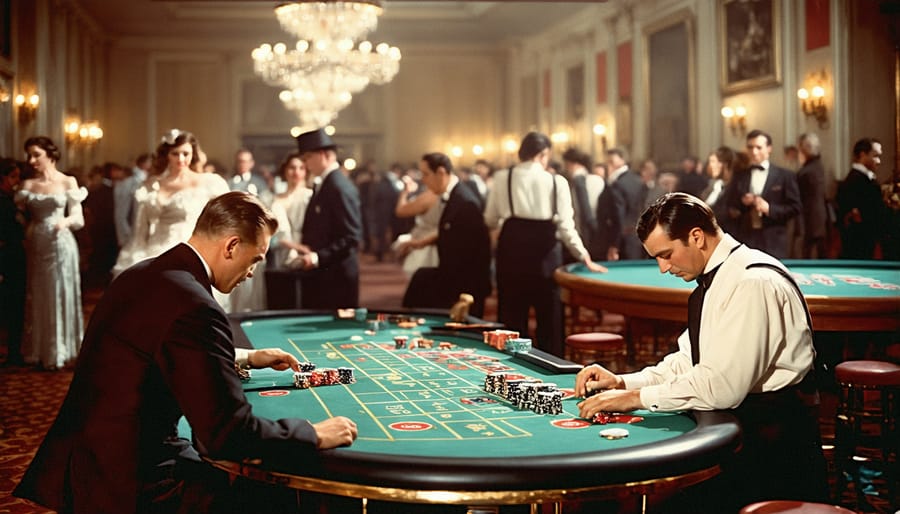
The allure of the casino has long captivated writers, who paint vivid pictures of glamorous establishments where fortune and fate intertwine. From the elegant casinos of Monte Carlo to the dazzling lights of Las Vegas, these settings have provided the perfect backdrop for thrilling narratives that explore human nature at its most daring.
Literature often portrays casinos as more than mere gambling houses – they become temples of possibility where ordinary people can brush shoulders with high society and dream of life-changing wins. The mixing of social classes, the tension between wealth and poverty, and the eternal hope of beating the odds create a rich tapestry of human drama that writers find irresistible.
The physical environment of the casino itself serves as a powerful metaphor: the perpetual night created by windowless rooms, the hypnotic whirl of roulette wheels, and the rhythmic chiming of slot machines all contribute to an atmosphere where time seems to stand still. Writers use these elements to craft stories where reality blurs and characters find themselves transported into a world where anything seems possible.
This romantic view of casinos continues to influence modern literature, even as gambling increasingly moves online. Contemporary authors often draw parallels between traditional casino glamour and the digital age’s promise of instant fortune, keeping the mystique alive for new generations of readers.
Digital Age Narratives: Online Gambling in Contemporary Fiction
The shift from brick-and-mortar casinos to online platforms has given contemporary authors an entirely new setting to explore. Unlike the smoky backrooms and neon-lit floors of traditional gambling fiction, online gambling unfolds in isolation: a lone figure at a laptop, multiple browser tabs open, the addictive loop of deposit bonuses and instant access. This transformation has attracted writers interested in how technology reshapes compulsion, anonymity, and the boundary between recreation and ruin.
Modern narratives capture the unique psychological landscape of digital gambling. The smartphone in your pocket becomes a 24/7 casino. There’s no closing time, no physical chips changing hands to mark your losses, just numbers on a screen that feel abstract until the bank account empties. Contemporary fiction exploring this terrain often focuses on the algorithmic seduction: personalized offers, gamification elements, and the way platforms engineer engagement. These stories aren’t just updating old gambling plots with new technology. They’re examining how the internet has fundamentally altered the experience, making it more accessible, more private, and arguably more dangerous than anything that came before.
Artistic composition showing a person’s face illuminated by a laptop screen, surrounded by floating playing cards and digital gambling symbols
Virtual Victories and Digital Defeats
Contemporary literature has embraced the digital revolution in gambling, creating captivating digital narratives that explore the unique psychological and social dimensions of online betting. Authors like Ben Mezrich in “Straight Flush” and Jonathan Lethem in “Chronic City” paint vivid pictures of virtual poker rooms and digital casinos, where traditional gambling themes intersect with modern technology.
These stories often highlight the contrast between physical and digital gambling spaces. The absence of face-to-face interaction, the constant accessibility of online platforms, and the blurred lines between reality and virtual worlds create compelling narrative tensions. Writers explore how the immediacy of digital transactions and the isolation of online gambling affect their characters’ decision-making and emotional states.
Modern literature also grapples with the democratization of gambling through technology. Characters no longer need to visit exclusive casinos or high-stakes poker rooms; they can experience the thrill of betting from their living rooms. This accessibility creates new narrative possibilities, as authors examine how ordinary people navigate the temptations and pitfalls of digital gambling.
The theme of addiction takes on new dimensions in these works, with protagonists struggling against the always-on nature of online platforms. Writers often portray the contrast between the glossy, inviting interface of gambling websites and the harsh realities of digital dependency. The anonymous nature of online gambling also features prominently, with characters hiding behind screen names while wrestling with very real consequences.
Recent novels and short stories frequently incorporate elements of cybersecurity, digital fraud, and virtual community dynamics, reflecting contemporary concerns about online gambling. These works show how technology has transformed not just how people gamble, but how they connect, compete, and cope with victory and defeat in the digital age.
The Psychology of the Digital Gambler
Literature in 2026 continues to explore the digital frontier of gambling narratives, with contemporary authors crafting stories that probe the psychological complexities of online gambling addiction. These works capture the unique isolation and accessibility that make digital gambling particularly compelling and dangerous in our hyper-connected world.
Recent novels and short stories portray characters drawn into virtual casino worlds where the lines between reality and digital fantasy blur. The smartphone becomes both a gateway to potential riches and a constant tempter in one’s pocket, a theme that resonates strongly with readers who understand the allure of always-accessible entertainment.
Contemporary writers depicting digital gambling addiction highlight several psychological factors that distinguish it from traditional gambling:
- Constant accessibility via mobile devices, removing all barriers to entry
- Algorithmic personalization and targeted engagement that adapts to individual behavior
- Gamification elements borrowed from video games and social media
- Social isolation despite the presence of virtual communities
- Loss of physical monetary cues when betting with digital credits
- The illusion of control through data, statistics, and betting histories
These narratives often contrast sharply with traditional gambling literature. While classic casino stories frequently romanticized the social aspects of gambling (the felt of the poker table, the camaraderie of players, the electric atmosphere of the casino floor), digital gambling literature emphasizes psychological isolation. Authors paint pictures of characters alone in dark rooms, bathed in the blue light of their screens, chasing losses in a virtual void.
Current works explore how online gambling platforms use sophisticated psychology and technology to keep users engaged, incorporating elements of game design and social media addiction into their storytelling. These stories serve as both compelling narratives and cautionary tales, reflecting society’s awareness of digital wellness and the importance of maintaining healthy relationships with technology.
From Pages to Pixels: Literary Themes That Bridge Both Worlds
The allure of risk, the intoxication of chance, and the razor-thin line between fortune and ruin have captivated storytellers for centuries. These themes didn’t arrive with the internet age or vanish into outdated manuscripts. They persist because they tap into something fundamental about human nature: our relationship with uncertainty and reward. What’s remarkable is how seamlessly these age-old narratives translate into the digital era, where the stakes might be virtual but the psychological pull remains visceral.
Classic literature gave us desperate gamblers in smoke-filled rooms, their fates sealed by the turn of a card. Contemporary narratives show us players bathed in screen glow, chasing jackpots through algorithms and random number generators. The setting shifts, but the core drama stays intact. Obsession, rationalization, the gambler’s fallacy, the devastating aftermath of addiction, these story elements work just as powerfully whether your protagonist is betting the family estate at a nineteenth-century roulette table or maxing out credit cards on a mobile casino app at 3 a.m.
This continuity matters because it reveals how certain human experiences transcend their medium. The technology changes, the social context evolves, but the fundamental psychological territory remains recognizable across generations.
Abstract illustration combining traditional dice and playing cards morphing into binary code and pixels
Fate, Fortune, and Free Will
In the realm of gambling literature, the interplay between fate, fortune, and free will creates a fascinating tapestry that reflects our deepest questions about human agency and destiny. Authors throughout history have woven these themes into their narratives, exploring how characters navigate the delicate balance between chance and choice. These stories often present gambling as a metaphor for life itself, where every decision carries both weight and uncertainty.
Many classic works draw on philosophical perspectives on fate to examine whether our destinies are predetermined or shaped by our choices. From Dostoyevsky’s “The Gambler” to more contemporary works, we see characters wrestling with the illusion of control, believing they can outsmart fate while simultaneously surrendering to its whims.
The tension between divine providence and human will appears repeatedly in gambling narratives, raising questions about responsibility and consequence. When characters face crucial betting decisions, they often find themselves torn between trusting their instincts and yielding to what feels like destiny. This internal struggle resonates deeply with readers, as it mirrors our own questions about life’s uncertainties.
Modern gambling literature continues this tradition while reflecting our digital age’s complexities. Today’s stories explore how technology affects our relationship with chance and choice, asking whether algorithms and statistics have replaced the role of fate in gambling. Yet the fundamental questions remain: Are we truly free to choose, or are our decisions guided by forces beyond our control? These enduring themes continue to captivate readers, making gambling literature a powerful lens through which to examine the human condition.
The Human Cost Behind the Games
Literature has long served as a powerful lens through which we can examine the devastating impact of gambling addiction on families, relationships, and communities. From Dostoyevsky’s “The Gambler,” where we witness the protagonist’s descent into obsession at the cost of love and dignity, to works published in the past decade, authors have masterfully portrayed the ripple effects of compulsive gambling.
Many literary works explore how gambling addiction tears families apart, depicting scenes of missed mortgage payments, empty college funds, and broken promises. In Arthur Miller’s “Death of a Salesman,” Biff’s discovery of his father’s secret gambling debts becomes a turning point that shatters his idealized view of his parent, highlighting how addiction can poison parent-child relationships.
The social cost is equally compelling in literature, with characters often losing not just money, but their standing in society, their friendships, and their self-respect. Charles Dickens, in particular, showed how gambling could push people to the margins of society, creating a cycle of poverty and desperation that affected entire communities.
Writers in 2026 continue this tradition while addressing challenges brought by online gambling. Recent novels and memoirs explore themes of isolation, as characters withdraw from real-world connections in favor of digital betting platforms. They paint vivid pictures of how smartphone apps and instant-access casinos can accelerate addiction, leading to faster and more catastrophic losses. According to research tracking gambling patterns, the average time from first online bet to problem gambling has decreased significantly as accessibility has increased.
These stories serve as powerful cautionary tales, reminding readers that behind every bet lies the potential for profound human suffering. Through careful character development and emotional storytelling, authors help us understand the true cost of gambling addiction, fostering empathy and awareness in their readers.
As we reflect on gambling’s enduring presence in literature, we can’t help but marvel at how these timeless narratives continue to resonate today. The transformation of gambling from smoky backroom card games to virtual poker rooms hasn’t diminished literature’s ability to capture the universal themes of risk, chance, and human nature. If anything, classic gambling narratives have become more relevant, helping us understand our relationship with gaming and betting.
Readers can find striking parallels between traditional literary gambling scenes and online gaming experiences. The psychological tensions, moral dilemmas, and social dynamics portrayed in these works offer valuable insights into current gaming culture. Whether it’s Dostoevsky’s compulsive gambler or characters navigating cryptocurrency casinos, literature continues to explore the fundamental human attractions and challenges associated with gambling.
The digital revolution has inspired a wave of gambling literature that bridges the gap between traditional casino narratives and modern gaming experiences. These works explore how technology has transformed not just how we gamble, but how we think about chance, risk, and reward. They remind us that while the platforms may change, the essential human stories remain the same.
Gambling themes in literature will likely continue to evolve alongside our changing gaming landscape. As virtual reality and cryptocurrency reshape the gambling experience, writers will find new ways to explore these themes, ensuring that literature remains a vital lens through which we can understand and examine our relationship with gambling in all its forms.
About Author
