
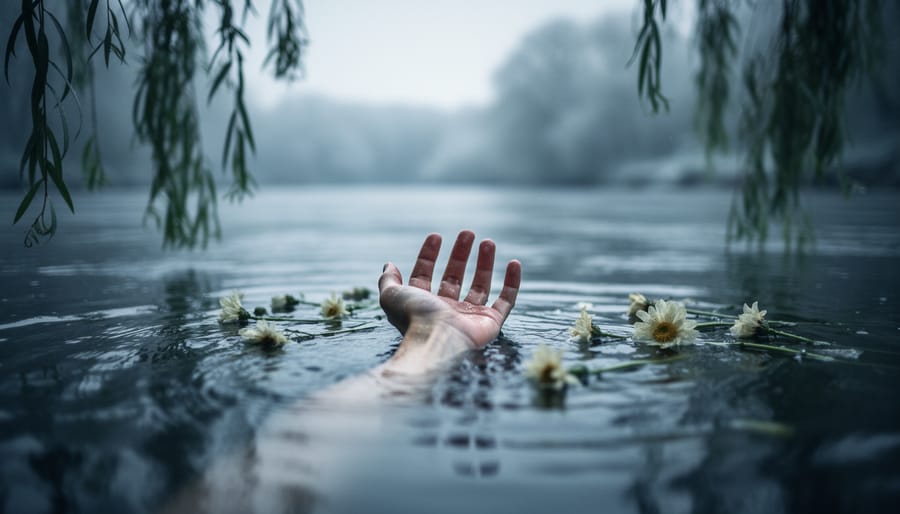
When Ophelia’s Death Spoke to My Quarantine Soul
Quarantine stripped away distraction and left many of us alone with literature’s most haunting figures, none more resonant than Ophelia, whose descent into madness and watery death suddenly felt less like distant tragedy and more like a mirror. During months of isolation, readers across the globe found themselves returning to Hamlet’s doomed heroine, recognizing in her unraveling something uncomfortably familiar: the fragility of the mind when cut off from agency, purpose, and human connection.
Ophelia’s story offers more than Gothic melancholy. She becomes a lens through which we can examine what happens when external chaos meets internal collapse, when the structures that once defined us crumble. Her flower-strewn madness and passive surrender to the brook speak to the psychological toll of powerlessness, a theme that took on new weight as many grappled with the loss of control that defined pandemic life.
But this reflection isn’t just about finding darkness in Shakespeare’s text. It’s about what quarantine taught us: that great literature survives precisely because it holds space for our most difficult moments. Readers who turned to Ophelia during lockdown weren’t seeking escape. They were seeking understanding, a framework for naming what felt unnameable.
This article explores why Ophelia’s death captivated so many minds during isolation, drawing on community discussions and shared experiences that emerged during those strange months. We’ll examine the psychology of her character, the symbolism that makes her final scene so enduring, and what our collective return to this four-hundred-year-old tragedy reveals about how we process grief, loss, and transformation through the stories we choose to revisit.
The Weight of Water: Understanding Ophelia’s Final Scene
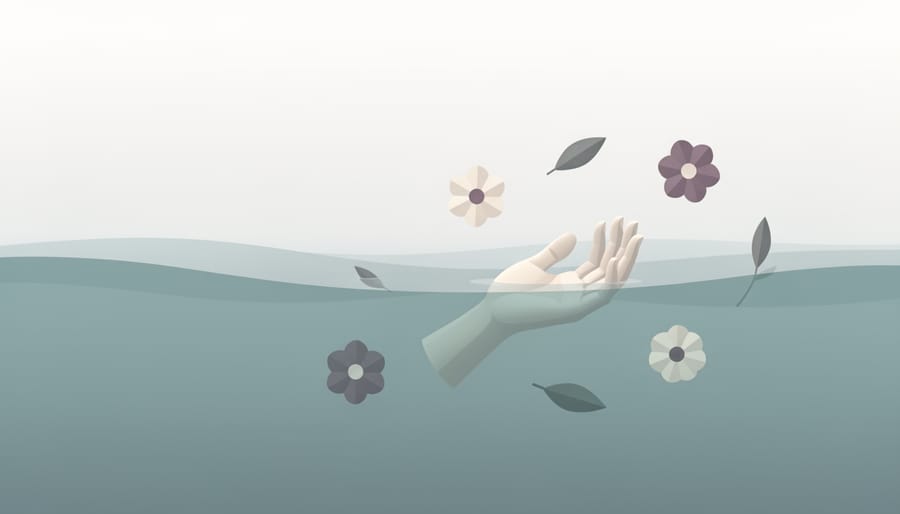
Ophelia never screams. That’s the detail that haunts me most when I revisit her death in Act IV, Scene VII of Hamlet. Gertrude describes Ophelia’s drowning with unsettling poeticism: a young woman festooned with wildflowers, singing old tunes as she slips beneath the surface of a brook. The imagery is almost Pre-Raphaelite before those paintings existed, lush and decorative, water lilies and floating fabric creating a tableau of tragic beauty.
But here’s what stopped me cold during quarantine: we never hear this scene happen. Gertrude narrates it secondhand, which means Ophelia’s final moments are filtered through someone else’s voice. Even in death, she doesn’t get to speak for herself. Shakespeare gives us flowers instead of words: crowflowers, nettles, daisies, long purples. Each bloom carries symbolic weight (innocence, pain, dissembling, death), transforming Ophelia into a walking bouquet of meaning rather than a person making a choice.
The ambiguity of that choice matters enormously. Did she fall, or did she let go? Gertrude describes “her garments, heavy with their drink” pulling Ophelia down while she sang “snatches of old tunes.” There’s a passivity that reads almost like acceptance, yet the church later questions whether she deserves Christian burial, suggesting suicide. Shakespeare leaves it deliberately unclear.
This tension between passive drowning and active surrender creates the scene’s philosophical weight. Ophelia doesn’t fight the water; she becomes part of it. Her madness has already dissolved the boundaries between self and nature, and the brook simply completes what grief began. She’s neither victim nor agent, neither murdered nor quite a suicide. She’s suspended in that terrible in-between, where circumstances and choice become impossible to untangle.
Why Quarantine Made Us Reach for Heavy Reads
When the world stopped, something curious happened in our reading habits. Locked away from distraction, many of us abandoned beach reads and escapist fiction for Camus, Kierkegaard, and yes, Shakespeare’s most devastating scenes. It wasn’t masochism. It was recognition.
Reading habits shifted during lockdown with philosophical texts and classic tragedies flying off digital shelves at unprecedented rates. The reason? Lightweight entertainment felt trivial when our lives had weight. We needed books that acknowledged the gravity we felt, texts that said “yes, existence is hard” without pretending otherwise.
Quarantine stripped away the usual noise. No commutes, no social obligations, no reasons to look away from ourselves. That uncomfortable quiet created the perfect conditions for wrestling with big questions. Who am I when no one’s watching? What matters when everything feels uncertain? These weren’t abstract philosophical exercises anymore. They were survival questions, and we needed thinkers who’d sat with similar darkness.
Tragic narratives offered strange comfort because they didn’t lie to us. Ophelia drowning, Sisyphus pushing his boulder, Meursault facing the absurd, these stories didn’t promise happy endings or silver linings. They simply said: suffering exists, confusion exists, and humans have always tried to make meaning from chaos. That honesty felt like oxygen when optimistic platitudes suffocated.
The isolation transformed how we read philosophy itself. These weren’t classroom assignments or intellectual exercises. They were companions in the dark, proof that others had survived their own versions of being trapped, powerless, and searching for meaning in stillness.
Ophelia as a Mirror: What Her Death Reflects About Powerlessness
The Voice That Was Never Heard
Ophelia speaks only when spoken to, and even then, her words scatter like wildflowers, beautiful, fragile, ultimately dismissed. Hamlet lectures her, Polonius manipulates her, and Gertrude observes her from a distance. No one truly listens. Her most powerful expression comes through madness, the only language left when sanity requires silence.
During lockdown, many of us recognized that particular ache. We’d talk to screens, send messages into digital voids, post thoughts that disappeared into algorithms. The quarantine turned us all into voices without echo chambers, speaking but not quite heard. Friends were thumbnails. Family was on mute. The performative listening of video calls never quite replaced actual presence.
Ophelia’s marginalization wasn’t just about gender or power. It was about existing in a space where your interior life doesn’t register as real to others. Where your pain is decoration for someone else’s drama. Shakespeare gives her exquisite poetry in her madness, yet even that becomes spectacle rather than communication.
Those of us drawn to quarantine philosophy reads often sought validation that our isolation mattered, that the strange grief of disconnection was worth articulating. Ophelia reminded us that sometimes silence isn’t chosen. Sometimes it’s the only role you’re allowed to play.
Drowning in Circumstances Beyond Your Making
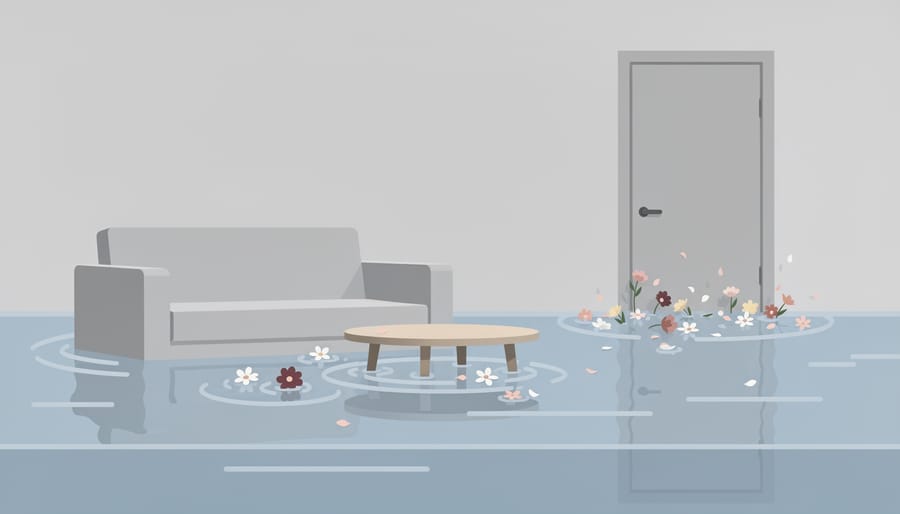
Ophelia’s drowning offers a hauntingly precise metaphor for those months when the world spiraled beyond anyone’s grasp. She didn’t choose the water, it claimed her, weighed down by garments that became anchors. There’s something uncomfortably familiar in that image when you remember March 2020, when control evaporated overnight.
The pandemic thrust us into circumstances we hadn’t authored. Jobs disappeared. Plans collapsed. Even leaving your apartment became a calculated risk. Like Ophelia tangled in her own clothing, we found ourselves ensnared by systems and situations not of our making, healthcare infrastructure, supply chains, government responses, the basic biology of viral spread. Individual will meant little against such massive forces.
Reading that drowning scene during lockdown, you couldn’t help but recognize the sensation: treading water while the current pulls you somewhere you never intended to go. Ophelia stops fighting. She floats. There’s a surrender in her death that felt uncomfortably relevant to those of us learning to accept what we couldn’t change.
The difference, perhaps, is that we kept our heads above water. We had to. But understanding her letting go helped us name what we were feeling, exhausted by circumstances too large to wrestle, tempted to stop struggling against the undertow.
Beauty and Madness: The Aestheticization of Suffering
There’s something unsettling about how beautiful we’ve made Ophelia’s death. John Everett Millais’ 1852 painting captured her floating among wildflowers, her face serene, her gown spread wide like petals on the water. It’s gorgeous. It’s also a suicide. During quarantine, scrolling through art history accounts and literary theory threads, I kept returning to this image and wondering: why does tragedy look so damn pretty?
The romanticization of Ophelia’s drowning didn’t start with the Pre-Raphaelites, but they perfected it. Artists and writers have spent centuries transforming her death from a messy, terrifying end into something aesthetically consumable. We’ve turned suffering into beauty so often that we’ve forgotten to question what we’re actually celebrating.
Notable interpretations have reshaped how we see Ophelia across centuries:
- Millais’ painting emphasizes floral beauty and peaceful resignation rather than violence or despair
- Feminist readings reclaim Ophelia as a victim of patriarchal control who chose her own escape
- Modern adaptations often portray her madness as creative liberation instead of mental breakdown
- Contemporary retellings sometimes position her death as romantic tragedy rather than systemic failure
Each interpretation reveals more about us than about Shakespeare’s character. We reshape Ophelia to fit whatever narrative helps us cope with senseless loss.
Here’s what quarantine forced me to confront: I was doing the same thing with my own experience. Posting carefully framed photos of sourdough and sunset walks, writing journal entries that found “silver linings” in isolation. I was aestheticizing my suffering, making it Instagram-worthy, turning genuine fear and loneliness into a curated narrative of “growth through adversity.”
Maybe that’s what we do with Ophelia too. We can’t bear the raw reality of a young woman driven mad and drowned, so we drape flowers over it. We make it mean something. We make it beautiful because the alternative, that suffering is just suffering, meaningless and ugly, is too much to accept. But acknowledging this impulse doesn’t make it wrong. Sometimes beauty is the only way we know how to grieve.
Finding Yourself in the Stillness: Philosophical Lessons from Isolation
Quarantine didn’t just give us time, it forced us into a confrontation with ourselves that most of us had been successfully avoiding for years. Without the usual distractions of commute-filled mornings, bustling offices, and weekend social obligations, we found ourselves sitting in unprecedented quiet. And in that quiet, many of us discovered something unsettling: we didn’t really know who we were when stripped of our routines and roles.
This explains why we reached for philosophy during those months. We needed frameworks to understand what was happening internally as much as externally. The enforced stillness became an accidental meditation retreat nobody signed up for.
What did that stillness teach? First, that being alone and being lonely are fundamentally different states. Solitude, when accepted rather than resisted, creates space for genuine self-examination. You notice thought patterns you’d been running from. You recognize which activities you genuinely enjoy versus which you’d been doing for performance or approval.
The isolation also revealed how much of our identity we’d outsourced to other people’s perceptions. Without colleagues to impress or friends to update, who were we? This identity crisis, while uncomfortable, offered a rare opportunity to rebuild from authentic desires rather than inherited expectations.
Perhaps most significantly, quarantine stillness taught us that we’re capable of sitting with discomfort without immediately reaching for distraction. We learned we could tolerate uncertainty, could exist in the space between what was and what would be. That capacity for presence, for simply being without constant doing, is what philosophers have advocated for centuries.
Ophelia never had the luxury of choosing her stillness. Ours was forced upon us, yes, but unlike her, we had the agency to decide what meaning we’d make from it. The philosophical reads we turned to weren’t escapism. They were tools for excavating ourselves from the rubble of a world that had temporarily stopped making sense.
Other Philosophy Reads That Hit Different in Quarantine
Some books quietly waited for their moment, and quarantine was it. While reading philosophy in lockdown became an unexpected coping mechanism for many, certain titles resonated with particular intensity depending on what we were feeling.
| Book | Core Theme | Why It Hit Different |
|---|---|---|
| Camus’ The Plague | Absurdism & collective crisis | Literally about quarantine, but the existential acceptance felt like a survival guide |
| Seneca’s Letters from a Stoic | Acceptance & inner peace | Short doses of wisdom for those craving control when everything felt chaotic |
| Woolf’s Mrs. Dalloway | Interior life & time | The compression of a single day mirrored our endless, identical lockdown days |
| Thoreau’s Walden | Solitude as choice | Reframed isolation as opportunity rather than punishment |
| Dickinson’s poetry | Domestic transcendence | A master of finding infinity in small rooms spoke directly to our confined reality |
For those drowning in anxiety, Marcus Aurelius offered a lifeline, his Meditations were basically pandemic journaling from 2,000 years ago, reminding us that humans have always faced uncertainty. If you were grieving lost time or plans, Tolstoy’s essays on mortality hit with brutal honesty but also strange comfort. The restless minds turned to Kafka, whose absurd bureaucratic nightmares suddenly felt less like surrealism and more like Tuesday afternoon Zoom calls.
What united these disparate texts was their refusal to offer easy answers. They sat with discomfort, examined it from all angles, and suggested that meaning emerges from the wrestling itself. We didn’t read them to escape quarantine, we read them to understand what quarantine was doing to us, to find language for the shapeless dread and unexpected revelations that filled those strange, suspended months.
Looking back now, Ophelia’s death wasn’t just a passage I stumbled upon during those strange, silent months. It became a companion piece to my own unraveling and rebuilding. Her descent into the water mirrored something we all felt, that sense of being pulled under by forces we couldn’t name or control, yet somehow finding a terrible beauty in the surrender.
The philosophical works we reached for during lockdown weren’t escapism. They were lifelines. Reading about powerlessness, agency, and the human condition while the world stood still gave us permission to feel big, complicated things without rushing to fix them. Literature held space for our confusion when nothing else could.
What strikes me most is how these ancient stories and timeless questions proved more relevant than ever. Ophelia drowned centuries ago on a fictional riverbank, yet her story offered more clarity about pandemic anxiety than any news cycle could. That’s the gift of great literature, it transcends its moment to meet us exactly where we are.
If you’re still discovering which books spoke to your isolation experience, there are more quarantine reading ideas that might resonate with your journey.
I’d love to hear what you reached for during those months. Which character became your unexpected mirror? What philosophical question kept you up at night? Share your quarantine reading revelations in the comments below.
About Author
